Procedure Guide ·X-Ray ·2026

Cat X-Ray — costs, what to expect & insurance

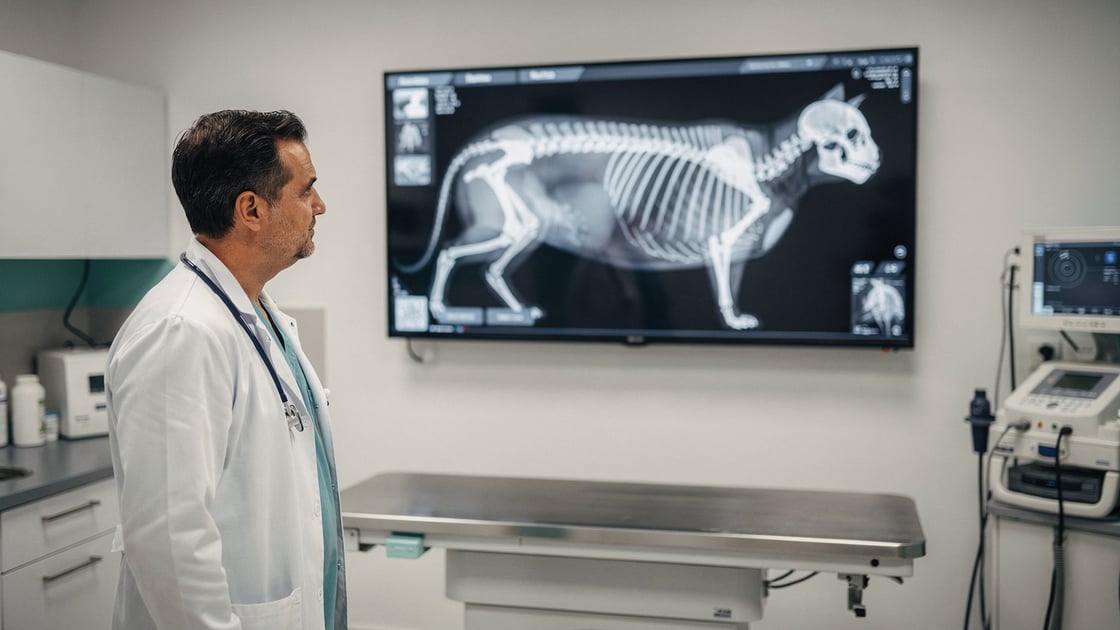
Diagnostic X-rays for a cat cost $200-$400 and are the most common imaging tool in veterinary medicine. Radiographs reveal bone fractures, foreign objects, heart size, lung conditions, intestinal blockages, and bladder stones. Most cats don't need sedation, and results are available immediately with digital X-ray systems.

X-Ray — vet costs and insurance
X-Ray — real vet costs and insurance guide.
№01
Key Facts & Real Costs

What It Shows

X-rays excel at showing bones, metal objects, dense foreign bodies, organ size and shape, heart silhouette, lung fields, and gas patterns in the intestines. They're the first-line imaging tool for suspected fractures, heart disease, breathing problems, vomiting, and trauma. Dental X-rays show tooth roots and jawbone detail. Best for bones, heart, lungs, and foreign objects

The Process

Your cat is positioned on the X-ray table — at least two angles (side and top-down) are typically taken. Most cats tolerate positioning with gentle restraint; anxious cats may need mild sedation. Digital X-rays produce instant images interpreted on the spot. Usually 2-3 views taken for a complete study

Cost Breakdown — $200-$400

Single-view X-ray ($75-$150). Two-view study ($150-$250). Three-view chest study ($200-$350). Full abdominal series ($200-$400). Dental X-rays ($100-$200). Sedation if needed ($50-$100). Radiologist interpretation if sent out ($50-$100). A standard study averages $200-$400

Recovery & Aftercare

No recovery needed from the X-ray itself. The procedure is quick and non-invasive. If sedation was used, allow 1-2 hours for it to wear off. Results are discussed immediately. The vet may recommend additional imaging (ultrasound, CT scan) or treatment based on findings. X-rays become part of your cat's medical record. No downtime — results are immediate

Total Cost — $200-$400

For a standard multi-view study. Emergency X-rays may cost more. Often combined with exam for $250-$500 total.

Risk — Minimal

Radiation exposure from diagnostic X-rays is very low. The procedure is safe and can be repeated as needed. No known health risks from diagnostic levels.

Duration — 10-20 Minutes

Positioning and taking images takes 10-20 minutes. Digital results are available within minutes.

When It's Needed

Limping, trauma, breathing difficulty, vomiting, suspected blockage, coughing, or any injury or illness needing imaging.

№02

The Real Cost

For a standard multi-view study.

Cost Breakdown$200-$400 Total Cost$200-$400
$200typical cost
№03
Insurance Traps Diagnostic X-rays are a standard covered expense — with the usual caveats.
Red flag · Coverage

X-Ray Coverage Basics

Diagnostic X-rays ordered to investigate injury or illness are covered by most accident/illness policies. This is a standard diagnostic expense. Whether the X-ray reveals a fracture, foreign body, or heart enlargement, the imaging itself is covered.


Red flag · Waiting period

Accident vs Illness Timing

X-rays for trauma (falls, hit by car) fall under accident coverage with a 0-14 day waiting period. X-rays for suspected illness (coughing, abdominal issues) use the 14-day illness waiting period. The classification affects when coverage kicks in.

Red flag · Deductible

Cost vs Deductible

At $200-$400, X-rays alone may not exceed your deductible. But they're typically part of a larger workup — combined with exam, treatment, and follow-up, the total claim usually surpasses it.

Red flag · Pre-existing

Pre-Existing Conditions

If X-rays are ordered for a condition that existed before enrollment, the claim is denied. For example, monitoring a known heart condition with chest X-rays would be excluded if the heart disease was diagnosed before your policy started.

X Ray and pet insurance guide

🇺🇸 US Pet Insurance Guide

Know what’s covered before you need it

Our guide shows exactly what to check in the fine print — before your first claim gets denied.

Insurance Guide
№04
Common Questions Real answers about costs, treatment, and insurance coverage.
0How much do cat X-rays cost?
A standard two-view X-ray study costs $150-$250. A three-view chest or abdominal series runs $200-$400. Single-view X-rays are $75-$150. Emergency X-rays may cost more. Dental X-rays during a dental procedure add $100-$200. If a board-certified radiologist interprets the images, add $50-$100.
1Does my cat need to be sedated for X-rays?
Most cats don't need sedation for X-rays. The procedure is quick and painless — just positioning on a table. Cats that are in severe pain, extremely anxious, or need very precise positioning (like dental X-rays) may need light sedation. Your vet will decide based on the situation.
2What can X-rays detect in cats?
X-rays detect bone fractures, foreign objects, heart enlargement, fluid in the lungs, intestinal gas patterns suggesting blockage, bladder stones, and organ size abnormalities. They're less useful for soft tissue detail — ultrasound is better for that.
3How many X-ray views does my cat need?
At minimum, two views are standard — side (lateral) and top-down. Three views are common for chest studies. More views mean more cost but better diagnostic accuracy; the vet decides based on what they're investigating.
4Are X-rays safe for cats?
Yes. The radiation dose from diagnostic X-rays is very low and poses no significant health risk. Modern digital systems use even less radiation than older film systems, and multiple views in one visit remain well within safe limits.
5What's the difference between X-rays and ultrasound for cats?
X-rays show bones, heart size, lung fields, and dense objects well. Ultrasound shows soft tissue detail — organ structure, fluid, and blood flow. They're complementary tools; X-rays are usually done first, with ultrasound following for more detail.
6How quickly do I get X-ray results?
With digital X-ray systems (standard in most clinics), images appear on screen instantly. Your vet can interpret them during the visit. If the images are sent to a board-certified veterinary radiologist for a second opinion, the formal report takes 24-48 hours.
7Does pet insurance cover cat X-rays?
Diagnostic X-rays for injury or illness are covered by most accident/illness policies. They're a standard diagnostic expense. Routine screening X-rays (not investigating specific symptoms) may not be covered. Pre-existing conditions are excluded, so X-rays related to a previously diagnosed problem won't be reimbursed.

Related Conditions

Marcel Janik, founder of RealVetCost

I'm a dog owner who got burned

My mother-in-law took her German boxer to the veterinary emergency room — $1,200 in tests, no answers. A different vet solved it in minutes with $8 pills.

That moment stuck with me. When you’re scared for your dog, you’ll pay anything. Some vets take advantage of that. I started digging into vet costs and pet insurance. The policies were confusing, the exclusions buried, the pricing impossible to compare. So I built the resource I wish existed. Real costs, real exclusions, plain speak. I’m not here to sell you a policy. I’m here so you don’t get blindsided.