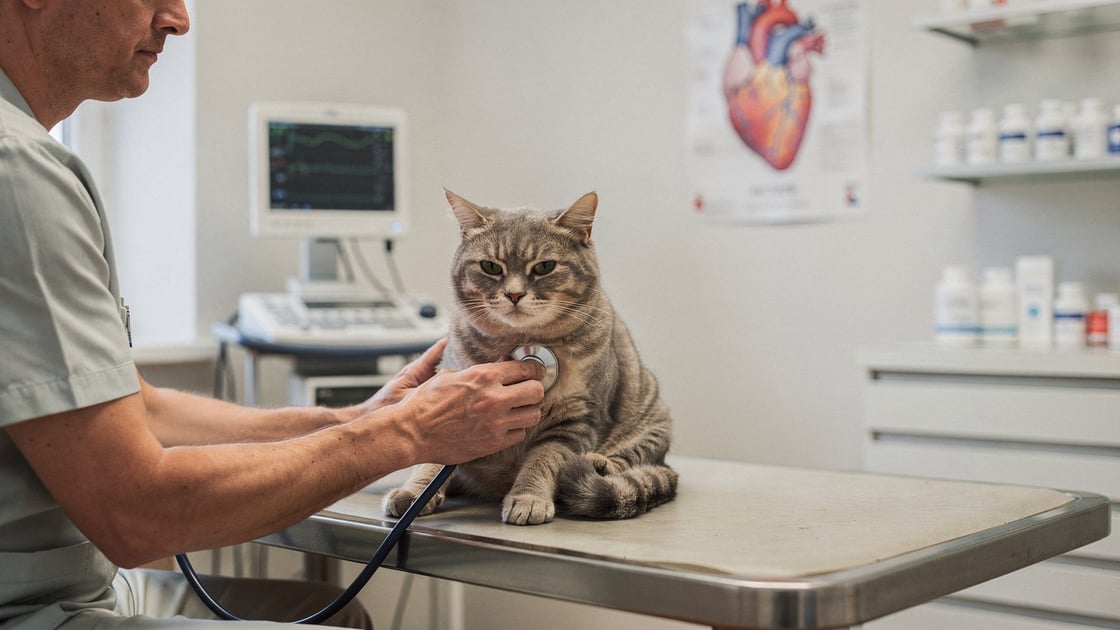
0What are the signs of heart disease in cats?
Many cats with heart disease show no symptoms at all — that's what makes it so dangerous. When signs do appear, watch for rapid or labored breathing, open-mouth breathing, lethargy, loss of appetite, and hiding more than usual. The most dramatic sign is sudden hind leg paralysis caused by a saddle thrombus (blood clot), which is a medical emergency. Some cats collapse or die suddenly without any prior symptoms.
1How much does it cost to treat heart disease in cats?
Diagnosis with echocardiogram and X-rays costs $400-$1,000. Monthly medications typically run $30-$200 depending on which drugs are needed. Monitoring echocardiograms every 6-12 months cost $300-$600 each. Emergency treatment for congestive heart failure or saddle thrombus runs $1,500-$4,000. Annual costs for managing heart disease typically reach $1,000-$5,000+.
2What is HCM in cats?
Hypertrophic cardiomyopathy (HCM) is the most common heart disease in cats. The heart muscle thickens abnormally, reducing the chamber size and making it harder for the heart to fill with blood and pump effectively. It has a genetic basis in some breeds, particularly Maine Coons and Ragdolls. HCM can lead to congestive heart failure, blood clots, or sudden death.
3What breeds are prone to heart disease?
Maine Coons and Ragdolls have identified genetic mutations that cause HCM — genetic testing is available for these breeds. Persians, British Shorthairs, and Sphynx cats are also at elevated risk. However, HCM can affect any cat, including domestic shorthairs. If you own a predisposed breed, annual echocardiographic screening is recommended.
4Can heart disease in cats be cured?
Heart disease in cats is not curable. Treatment focuses on managing symptoms, slowing progression, and preventing complications like blood clots. Medications can improve quality of life and extend survival, but the underlying heart muscle changes are permanent. Some cats with mild HCM live normal lifespans with monitoring, while others progress to heart failure.
5What is a saddle thrombus in cats?
A saddle thrombus (aortic thromboembolism) occurs when a blood clot forms in the heart and travels to the aorta, blocking blood flow to the hind legs. The cat suddenly loses the ability to use its back legs, which are cold and painful. This is an emergency — it's extremely painful and carries a guarded prognosis. About 40-50% of cats don't survive the initial episode. It's a known complication of HCM.
6How is heart disease diagnosed in cats?
An echocardiogram (heart ultrasound) is the definitive test — it measures heart wall thickness and shows how well the heart is functioning. Chest X-rays show heart size and any fluid buildup. A proBNP blood test can screen for heart disease before symptoms appear. Your vet may also run an ECG to check for arrhythmias. A heart murmur or gallop rhythm during a physical exam often prompts further testing.
7Does pet insurance cover heart disease in cats?
Most comprehensive pet insurance policies cover feline heart disease, including diagnosis, medications, and emergency care. The key is enrolling before any heart-related findings appear in vet records. A heart murmur documented before enrollment will likely result in cardiac claims being denied as pre-existing. For breeds with known HCM risk, some insurers may exclude hereditary cardiac conditions.