Procedure Guide ·Dental Cleaning ·2026

Cat Dental Cleaning — costs, what to expect & insurance

A professional dental cleaning for a cat costs $300-$700 and requires general anesthesia. The procedure includes scaling, polishing, and a full oral exam. Dental disease affects the majority of cats over age 3, and untreated tartar buildup leads to painful infections, tooth loss, and potential organ damage from bacteria entering the bloodstream.

Dental Cleaning — vet costs and insurance
Dental Cleaning — real vet costs and insurance guide.
№01
Key Facts & Real Costs

Why It's Done

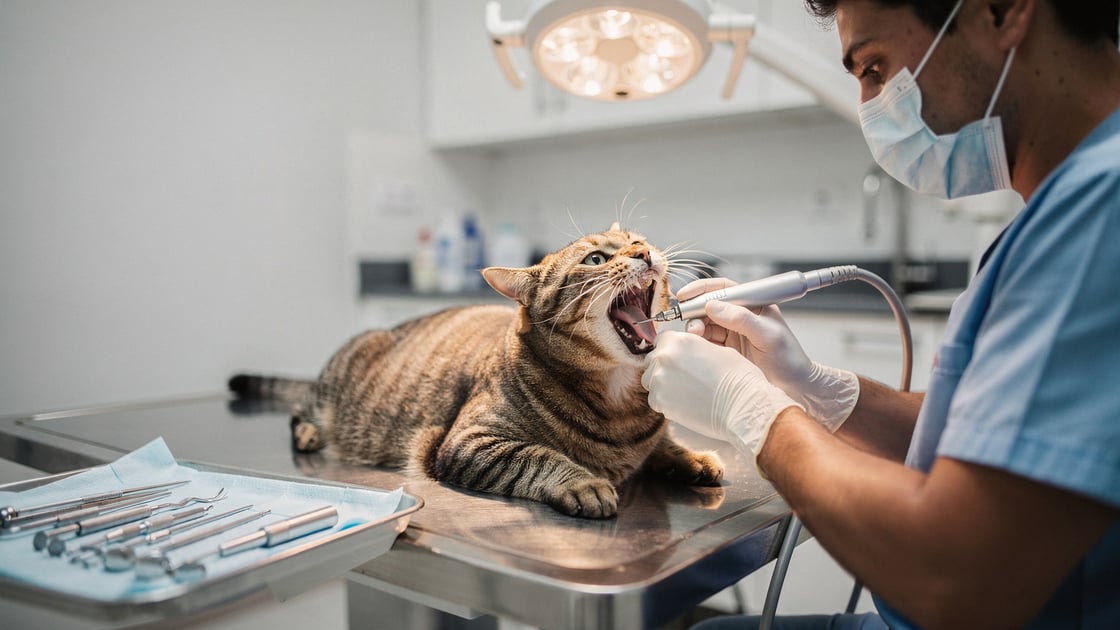
Professional dental cleaning removes tartar and plaque that brushing can't reach. It allows the vet to examine each tooth, probe for pockets, and take dental X-rays to check for problems below the gumline. Untreated dental disease causes pain, difficulty eating, and bacteria can spread to the heart, kidneys, and liver. Affects over 70% of cats by age 3

The Process

Pre-anesthetic bloodwork to ensure your cat is safe for anesthesia. Full oral exam and dental X-rays under anesthesia. Ultrasonic scaling to remove tartar above and below the gumline. Polishing to smooth tooth surfaces. Fluoride treatment in some clinics. The vet may find teeth that need extraction during the cleaning. The full procedure takes 45-90 minutes

Cost Breakdown — $300-$700

Pre-anesthetic bloodwork ($80-$150). Anesthesia and monitoring ($150-$300). Dental scaling and polishing ($100-$200). Dental X-rays ($100-$200). Extractions are additional ($100-$300 per tooth). Antibiotics or pain medication if needed ($30-$60). Average $300-$700 without extractions

Recovery & Aftercare

Most cats go home the same day and recover from anesthesia within 12-24 hours. Soft food for 1-3 days if gums are tender. If extractions were performed, soft food for 7-10 days and pain medication. Establish home dental care with brushing or dental treats. Annual cleanings are recommended for most cats. Recovery from cleaning alone is 24-48 hours

Total Cost — $300-$700

Without extractions. If teeth need pulling, total can reach $1,000-$2,000+ depending on the number of extractions.

Anesthesia Risk — Low

Modern anesthesia protocols are safe. Pre-anesthetic bloodwork identifies risks. Complications occur in less than 1% of healthy cats.

Procedure Duration — 45-90 Minutes

The cleaning itself takes under an hour. Total time at the clinic is 6-8 hours including prep and recovery.

When It's Needed

Recommended annually for most cats. Bad breath, red gums, drooling, and difficulty eating are signs it's overdue.

№02

The Real Cost

Without extractions.

Cost Breakdown$300-$700 Total Cost$300-$700
$300typical cost
№03
Insurance Traps Dental coverage is one of the most confusing parts of pet insurance.
Red flag · Routine exclusion

Dental Coverage Basics

Routine dental cleanings are generally not covered by standard accident/illness policies. However, if dental disease is diagnosed and treatment is medically necessary, some policies cover the cleaning and extractions. Wellness add-ons may reimburse $100-$200 toward annual cleanings.

Red flag · Waiting period

Dental Waiting Periods

Many policies have a separate dental waiting period of 30-90 days, longer than the standard illness waiting period. Some policies exclude dental illness entirely. If your cat has pre-existing dental disease at enrollment, all dental treatment will be excluded.

Red flag · Coverage

Cost vs Coverage

A single cleaning costs $300-$700; with extractions the bill reaches $1,000-$2,000+. Cats needing annual cleanings with occasional extractions can generate $1,000-$3,000 in dental bills per year — where insurance becomes genuinely valuable.

Red flag · Pre-existing

Common Exclusions

Many policies exclude cosmetic dental procedures and orthodontics. Some exclude all dental cleanings unless disease is documented. Pre-existing dental conditions are always excluded. Read the dental section of any policy carefully — it varies widely between insurers.

Dental Cleaning and pet insurance guide

🇺🇸 US Pet Insurance Guide

Know what’s covered before you need it

Our guide shows exactly what to check in the fine print — before your first claim gets denied.

Insurance Guide
№04
Common Questions Real answers about costs, treatment, and insurance coverage.
0How much does a cat dental cleaning cost?
A professional dental cleaning costs $300-$700 without extractions. This includes pre-anesthetic bloodwork, anesthesia, scaling, polishing, and dental X-rays. If teeth need to be extracted, add $100-$300 per tooth. A cleaning with multiple extractions can total $1,000-$2,000+.
1Does my cat really need anesthesia for a dental cleaning?
Yes. Cats won't hold still for scaling below the gumline, and dental X-rays require precise positioning. Anesthesia-free dental cleanings only remove visible tartar and miss the disease happening below the gumline where it matters most. Veterinary dental organizations strongly advise against anesthesia-free dentals.
2How often should I get my cat's teeth cleaned?
Most vets recommend annual dental cleanings starting around age 2-3, though some cats need them more frequently. Your vet will assess dental health at annual checkups and recommend a schedule based on your cat's individual needs. Cats prone to dental disease may need cleanings every 6-12 months.
3What are the signs my cat needs a dental cleaning?
Bad breath is the most common sign. Red or swollen gums, visible tartar buildup (yellow or brown on teeth), drooling, pawing at the mouth, dropping food while eating, and reluctance to eat hard food are all indicators. Some cats hide pain well, so regular vet exams are important.
4Is it safe to put an older cat under anesthesia for dental work?
With proper pre-anesthetic bloodwork and monitoring, anesthesia is generally safe for older cats. Age alone is not a contraindication. The vet will check kidney and liver function before proceeding. The risks of untreated dental disease often outweigh the anesthesia risk for otherwise healthy senior cats.
5What happens if I skip dental cleanings?
Untreated dental disease progresses from gingivitis to periodontitis, causing pain, tooth loss, and bone destruction. Bacteria from infected gums can damage the heart, kidneys, and liver. Advanced dental disease requires far more expensive treatment than routine cleanings.
6Can I brush my cat's teeth at home?
Yes — it's the best way to slow tartar buildup between cleanings. Use cat-specific toothpaste, never human toothpaste. Start with finger brushing and work up to a small toothbrush. Even a few times per week makes a significant difference.
7Does pet insurance cover cat dental cleanings?
Routine cleanings are usually not covered by standard policies. If dental disease is diagnosed and treatment is medically necessary, some policies cover cleanings and extractions. Dental waiting periods are often 30-90 days. Check your policy's dental section specifically.

Related Conditions

Marcel Janik, founder of RealVetCost

I'm a dog owner who got burned

My mother-in-law took her German boxer to the veterinary emergency room — $1,200 in tests, no answers. A different vet solved it in minutes with $8 pills.

That moment stuck with me. When you’re scared for your dog, you’ll pay anything. Some vets take advantage of that. I started digging into vet costs and pet insurance. The policies were confusing, the exclusions buried, the pricing impossible to compare. So I built the resource I wish existed. Real costs, real exclusions, plain speak. I’m not here to sell you a policy. I’m here so you don’t get blindsided.