Disease Guide ·Osteosarcoma ·2026

Osteosarcoma in Cats — symptoms, vet costs & insurance

Osteosarcoma (bone cancer) in cats is rare — but cats have significantly better outcomes than dogs: amputation alone achieves a median survival of about 2 years, versus 4-5 months in dogs. Unlike dogs, cats with limb osteosarcoma rarely have metastatic disease at diagnosis, and chemotherapy is not routinely required. Amputation costs $2,000-$4,000. Early detection of unexplained lameness is key.

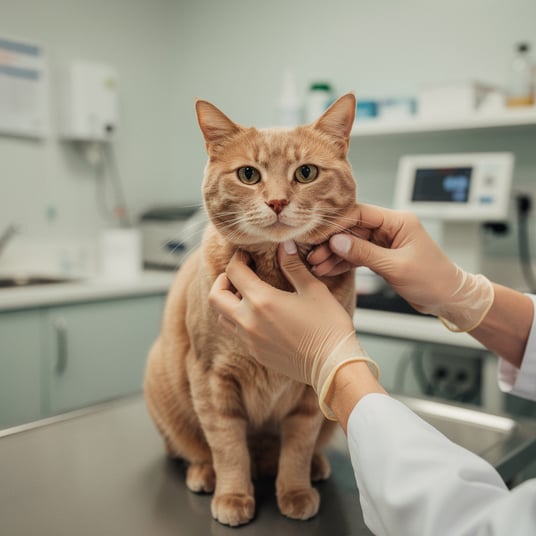
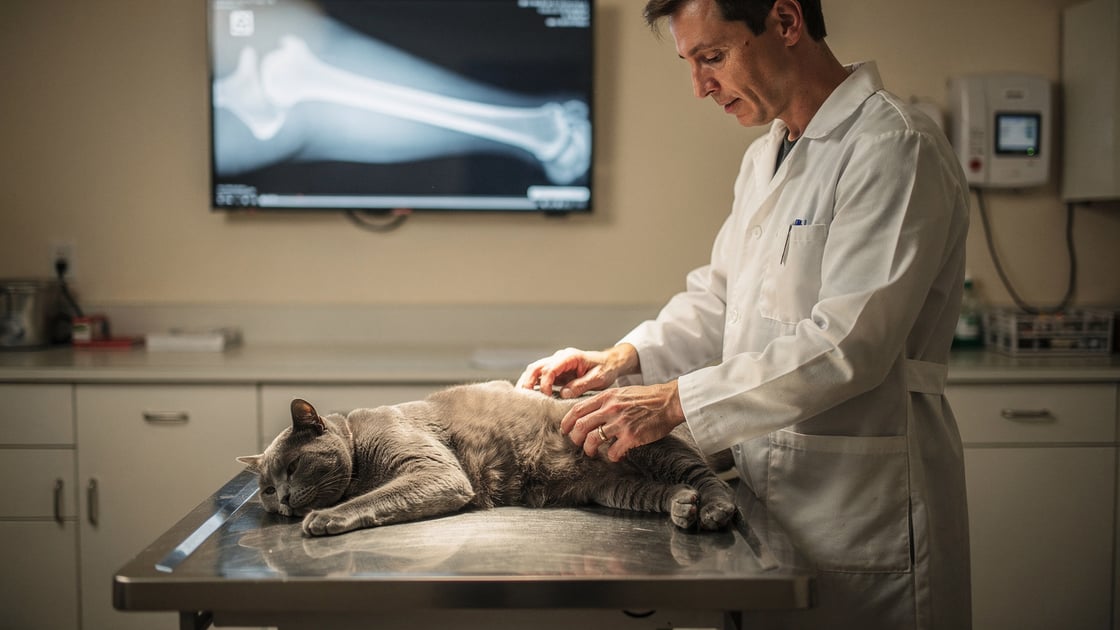
Veterinarian examining feline bone cancer with X-ray review in a clinic
Osteosarcoma in cats — real vet costs and insurance guide.
01/04
Key Facts & Real Vet Costs

About Feline Osteosarcoma

Osteosarcoma (OSA) is a malignant bone tumor (~5% of feline bone tumors). Appendicular (limb) OSA has ~5-10% metastatic rate vs ~90% in dogs—far better prognosis with amputation alone. Axial OSA (spine, skull, pelvis) worse prognosis. Hind limbs most common. Cats have far better prognosis than dogs

Symptoms

Progressive lameness in one limb that doesn't improve with pain medication. Firm, painful bone swelling developing over weeks to months. Reduced activity, decreased appetite, weight loss. Axial OSA: facial swelling, difficulty eating, neurological signs. Pathological fractures can occur. Progressive lameness + bone swelling in one limb

Diagnosis — $400-$900

Bone X-rays ($150-$300): lysis and/or new bone formation. Chest X-rays ($150-$300) for metastasis. Blood panel as baseline. Bone biopsy ($300-$600): confirms OSA and rules out chondrosarcoma, fibrosarcoma. CT scan ($1,000-$2,000) for surgical planning. Bone radiographs + biopsy confirm the diagnosis

Treatment — $2,000-$4,500

Amputation ($2,000-$4,000): treatment of choice; cats adapt extremely well. Median survival ~18-24 months. Chemotherapy not routinely recommended—low metastatic rate less beneficial than in dogs. Palliative care ($100-$200/month) when surgery declined. Axial OSA: surgery when operable. Amputation alone achieves ~18-24 months median survival

Total Cost — $2,500-$5,000

Diagnosis + amputation + recovery. If chemotherapy added (not routine): add $2,000-$3,000. Palliative care only: $100-$200/month ongoing.

Older Cats Most at Risk

Feline OSA most common in middle-aged to older cats (mean age ~10 years). No specific breed predisposition. Cats are at much lower risk than large-breed dogs.

Prognosis — Better Than Dogs

Appendicular OSA with amputation: median survival ~24 months. Some cats survive 3-5+ years. Axial OSA: shorter median survival depending on location and surgical options.

Quality of Life After Amputation

Cats adapt remarkably well to three legs. Within days of surgery, most cats begin moving normally. Quality of life is excellent for the vast majority of tripod cats. Pre-existing arthritis in other limbs may be a consideration.

02/04

The Real Cost

Diagnosis + amputation surgery + recovery.

Diagnosis + staging$400-$900 Amputation surgery$2,000-$4,000 Total Cost$2,500-$5,000
$3,000typical cost
03/04
Insurance Traps A rare but serious cancer — insurance coverage can make amputation financially possible.
Red flag · Coverage

Coverage Basics

Osteosarcoma is covered as cancer by most policies. Coverage includes biopsy, staging X-rays, amputation, and post-op care. Since cats typically don't need chemotherapy, amputation is the primary covered expense—insurance provides direct financial benefit.


Red flag · Pre-existing

Prior Lameness Pre-existing Trap

Any prior lameness, limping, or bone issues before enrollment may exclude musculoskeletal conditions as pre-existing—even an old X-ray showing arthritis in the same limb. Document your cat's current health status at enrollment to avoid challenges.

Red flag · Exclusion

Amputation Coverage

Amputation for osteosarcoma is medically necessary cancer treatment, not elective. Documented OSA diagnosis via biopsy plus surgical recommendation from a vet supports medical necessity. Get the biopsy result before surgery for definitive documentation.

Red flag · Cancer limits

Cancer Treatment Limits

Verify your policy covers amputation plus diagnostics ($3,000-$5,000). Per-condition limits of $3,000 or less may not fully cover diagnosis and surgery. Comprehensive policies with $5,000+ limits provide full coverage.

Pet Insurance Due Diligence Workbook
Happy readers

Happy readers

🇺🇸 US Pet Insurance Guide

Pet Insurance Worksheet

Not a book. Not a course. One printable worksheet that walks you through the exact questions and red flags — so you know what you're signing before you sign it. Takes 10 minutes. Saves you thousands.

Download the Worksheet

Instant PDF. Print it, fill it out, bring it to your insurer call.

04/04
Common Questions Real answers about osteosarcoma in cats, amputation, and insurance coverage.
0Is osteosarcoma common in cats?
No — osteosarcoma is relatively rare in cats, accounting for ~5% of feline bone tumors. Lifetime risk is much lower than in large-breed dogs. When cats do develop osteosarcoma, they have a significantly better prognosis than dogs.
1Why do cats do better with osteosarcoma than dogs?
Metastatic rate. Dogs have ~90% microscopic metastasis at diagnosis—amputation rarely cures them. Cats have only ~5-10%, so amputation removes the disease in many. Median survival: ~24 months in cats vs 4-5 months in dogs.
2Do cats with osteosarcoma need chemotherapy?
Chemotherapy is not routinely recommended—low metastatic rate unfavorable. Some oncologists consider it for high-grade tumors with vascular invasion, but most cats get amputation alone with excellent results. Major advantage over dogs, where chemo is standard.
3How is osteosarcoma diagnosed in cats?
Bone X-rays show characteristic lysis and/or new bone formation. Chest X-rays evaluate lung metastasis. Bone biopsy confirms OSA and rules out chondrosarcoma, fibrosarcoma, or fungal infection. CT scan improves surgical planning and lymph node evaluation.
4How well do cats adapt to three legs after amputation?
Remarkably well. Cats are light and typically adapt within days to weeks. Most navigate stairs, jump onto furniture, and move normally. Quality of life is excellent for tripod cats. Pre-existing arthritis in other limbs is worth considering, but rarely limits recovery.
5What is the survival rate for cats with osteosarcoma?
Appendicular OSA with amputation: median ~24 months; some survive 3-5+ years—far better than dogs (4-5 months). Axial OSA (skull, vertebrae, pelvis) worse prognosis: harder surgical margins, outcomes vary with location.
6Can osteosarcoma be treated without amputation in cats?
Limb-sparing surgery is technically difficult and rarely performed. Palliative care (NSAIDs, opioids, bisphosphonates) manages pain weeks to months without affecting progression. Radiation provides temporary relief for unresectable tumors. For healthy cats, amputation recommended given excellent quality of life.
7Does pet insurance cover osteosarcoma treatment in cats?
Osteosarcoma is covered as cancer by most policies — biopsy, staging X-rays, CT, amputation, and post-op included. Key traps: prior lameness before enrollment may make bone conditions pre-existing; policy cancer limits should exceed $5,000 to cover full diagnostics plus surgery.

Related Conditions

Marcel Janik, founder of RealVetCost

I'm a dog owner who got burned

My mother-in-law took her German boxer to the veterinary emergency room — $1,200 in tests, no answers. A different vet solved it in minutes with $8 pills.

That moment stuck with me. When you're scared, you'll pay anything — and some vets price accordingly. I dug into vet costs and insurance. Confusing policies, buried exclusions, impossible to compare. So I built the resource I wish existed: real costs, real exclusions, plain language. Not here to sell you a policy. Here so you don't get blindsided.