Why Your Dog Snores: When It's Cute and When It's a Medical Emergency
Some snoring is normal — most isn't. The line between cute Frenchie sleep noises and brachycephalic obstructive airway syndrome (BOAS) is the line between healthy and a 5-year shorter lifespan. Here's how to tell which side your dog is on.
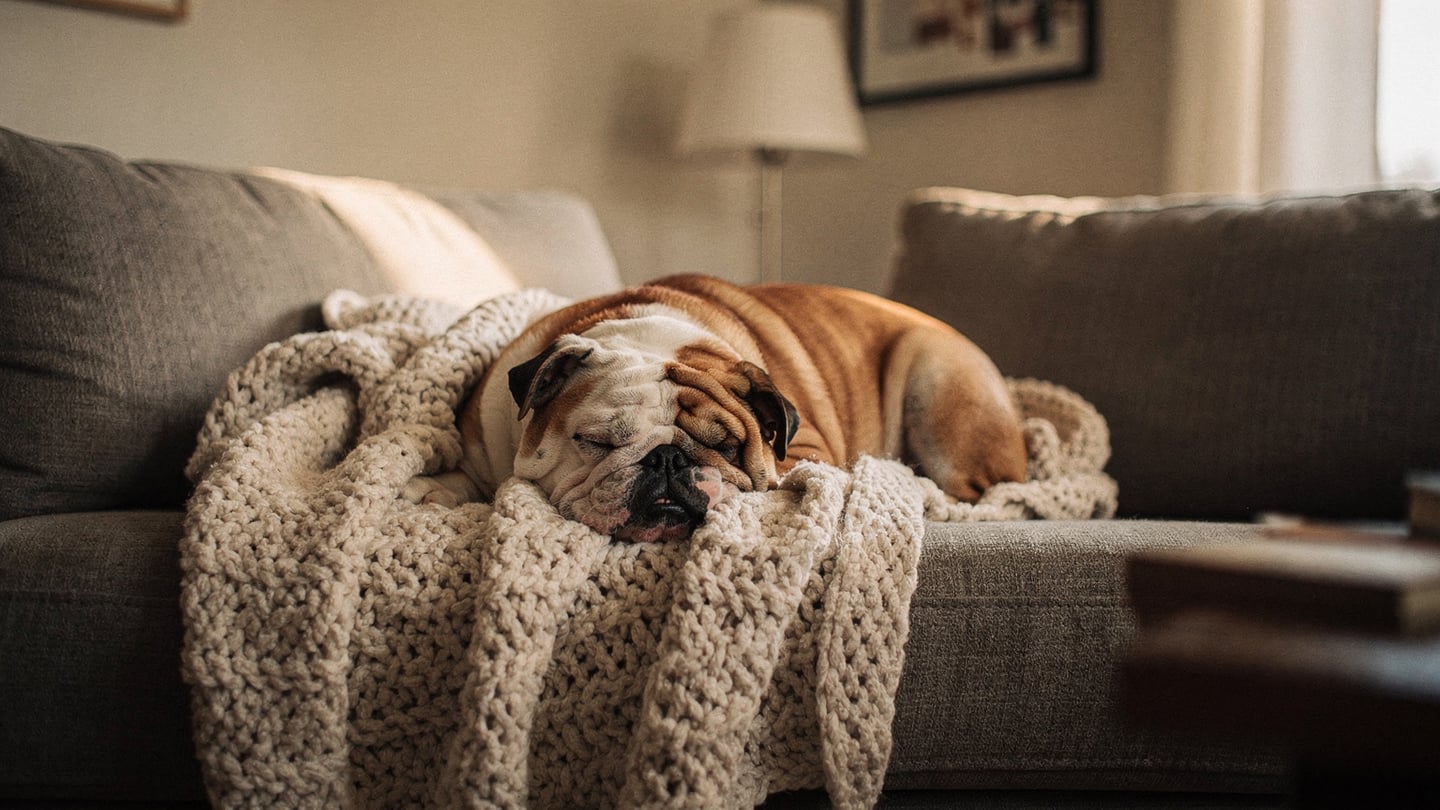
If your dog has a flat face and snores nightly, this isn't a personality quirk. It's a clinical condition with a name and a surgical fix.
Normal Dog Snoring vs. Pathological Snoring
Most dogs make some sleep noise. A soft, intermittent breathing sound is normal, especially in deep sleep when muscle tone drops. The body relaxes, the soft palate vibrates slightly, and gentle snoring happens. Long-skulled breeds (Greyhounds, Collies) almost never snore noticeably. Medium-skulled breeds (Labradors, Beagles) snore occasionally, mostly when sleeping in odd positions.
Pathological snoring is different. It's loud (audible across the room), continuous (not just during deep sleep), and accompanied by other signs: snorting awake, struggling to breathe, sleeping in upright positions, or sleeping with the head propped up to keep the airway open. These dogs aren't sleeping well — they're sleep-disrupted by their own anatomy.
The pattern that should worry you: your dog snores every night, snores while awake (during rest, not just exertion), occasionally wakes up gagging or coughing, or sleeps with the neck stretched out unusually. That's not character. It's the airway working too hard.
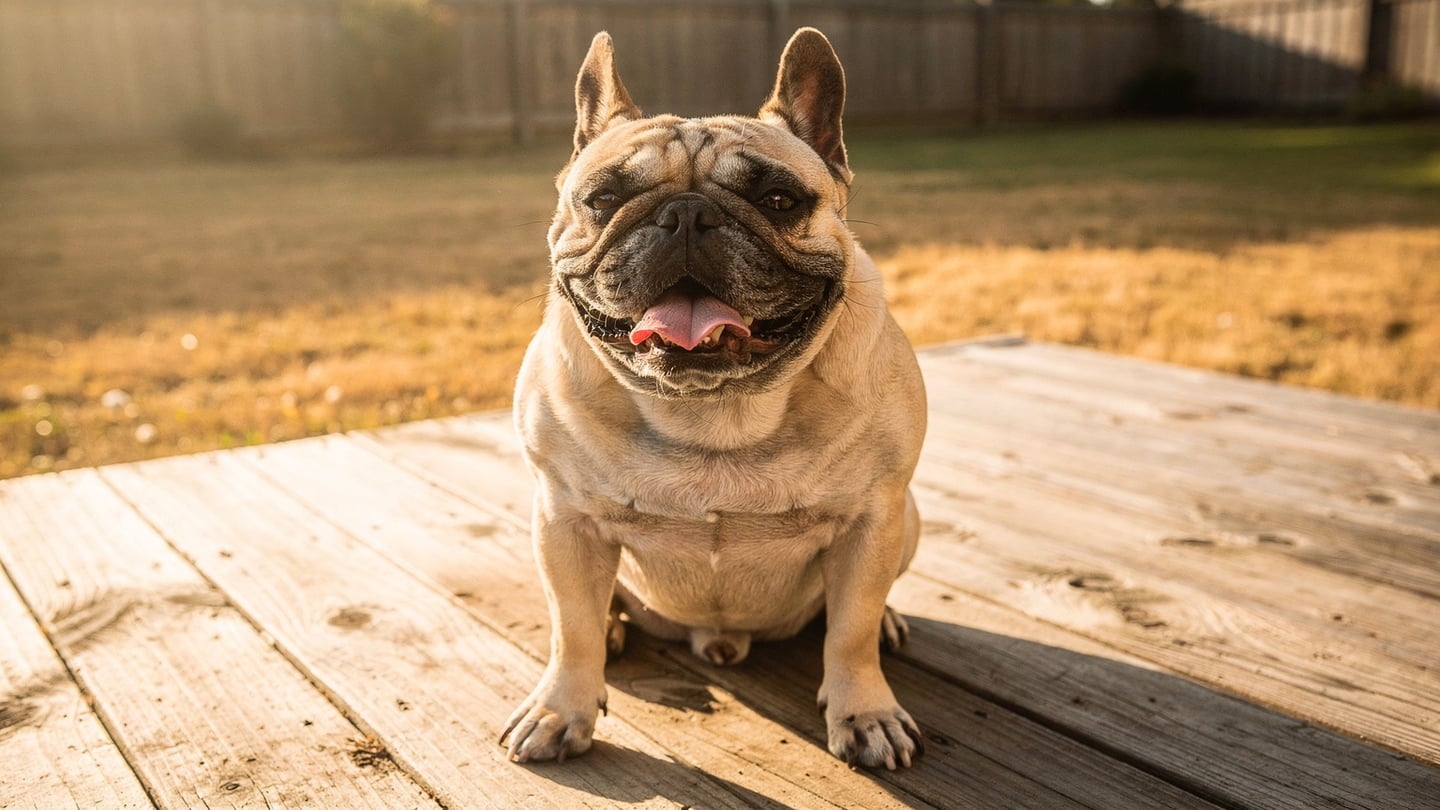
In brachycephalic breeds — Frenchies, English Bulldogs, Pugs, Boston Terriers, Shih Tzus, Pekingese, Cavalier King Charles Spaniels — heavy snoring is so normalized that owners often don't recognize it as a clinical sign. "That's just how Frenchies sound" is a sentence that has cost a lot of dogs years of life.
What BOAS Actually Is
Brachycephalic Obstructive Airway Syndrome (BOAS) is the medical name for the breathing problems caused by short-skull anatomy. The skull is shortened, but the soft tissue inside (palate, tonsils, larynx) isn't proportionally smaller. The result is a too-much-tissue-in-too-small-a-space airway.
BOAS includes four primary anatomical abnormalities: stenotic nares (narrowed nostrils), elongated soft palate (which obstructs the airway), everted laryngeal saccules (turned-out tissue near the vocal cords that flaps in the airflow), and tracheal hypoplasia (narrow windpipe in some severe cases). Each component restricts airflow; combined, they produce the characteristic snoring, snorting, and exercise intolerance.
Severity varies. Mild BOAS dogs snore but otherwise function. Moderate BOAS dogs can't exercise in heat, cough during meals, sleep poorly, and tire fast. Severe BOAS dogs are at constant risk of acute respiratory crisis — usually triggered by exercise, stress, or heat.
The most useful threshold for owners: if your dog can't run for 5 minutes on a moderate day without sounding like it's drowning, that's not normal even for a Frenchie. That's clinical-grade BOAS that benefits from veterinary evaluation and often surgical correction.
Warning Signs Beyond Snoring
Snoring while awake. Sleep snoring is one thing. Snorting and noisy breathing while resting on the couch — that's BOAS, not character. The airway shouldn't sound active when the dog isn't doing anything.
Exercise intolerance. A 3-year-old Frenchie that can't walk 15 minutes on a 70°F day without sitting down has clinically significant BOAS. The dog isn't lazy — it's at the limit of its ability to oxygenate.
Reverse sneezing or chronic cough. The throat-clearing, snorting episode that owners think is choking is often a BOAS-related airway irritation. Occasional reverse sneezing is fine. Daily reverse sneezing is a sign.
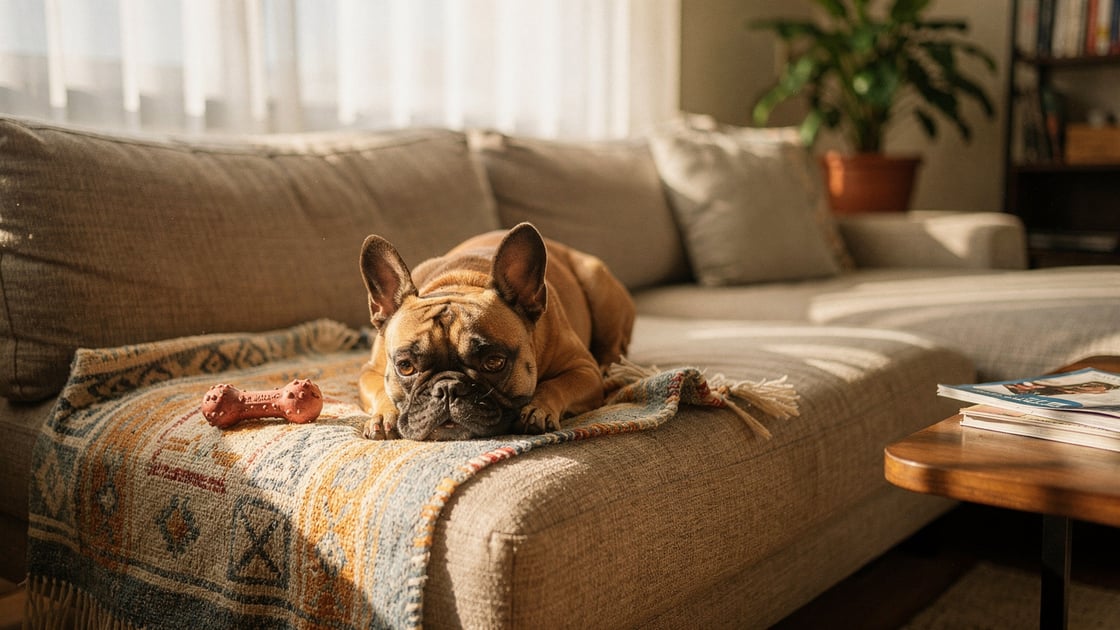
Sleeping with toys, bones, or anything propping up the head. Dogs with airway compromise instinctively position themselves to keep the airway open. If your dog can't sleep on its side without snoring violently, but sleeps fine on its chest with the head elevated, that's positional adaptation to airway obstruction — a clinical sign.
Bluish gums after exercise. Cyanosis means oxygen delivery isn't keeping up with demand. Even brief cyanosis post-exercise is a same-week vet visit.
Treatment: When Surgery Helps
BOAS surgery is the standard treatment for moderate-to-severe cases. The most common procedures are widening of the nostrils (stenotic nares correction) and shortening of the soft palate. Both are typically done together. Cost: $1,500–$4,500 depending on procedures and region. Recovery: 2–3 weeks of restricted activity.
Outcomes are generally excellent when surgery is done early. Dogs that have BOAS correction at 1–3 years old often experience dramatic improvement in exercise tolerance, sleep quality, and overall energy. The earlier the intervention, the better the lifetime impact.
Waiting until "it gets bad" is the wrong strategy. Chronic airway obstruction causes secondary changes — laryngeal collapse, tracheal weakness, chronic gastrointestinal disease (these dogs swallow constantly to clear the airway). By the time owners decide it's bad enough to fix, some of the damage is permanent.
Pet insurance and BOAS: Coverage varies wildly. Some policies exclude BOAS as a breed-related pre-existing condition. Others cover correction if diagnosed after enrollment. Read the breed-specific exclusion list before assuming you're covered.
Living With a Snoring Brachycephalic Breed
Weight management is non-negotiable. An overweight Frenchie has worse BOAS than a lean Frenchie of the same anatomical severity. Body Condition Score 4–5 out of 9 reduces airway pressure and dramatically improves quality of life. "Just one more treat" is a meaningful health decision in these breeds.
Avoid heat and humidity. See our heat stroke guide — brachycephalic breeds are at 3–5× higher risk than other dogs. The same compromised airway that causes snoring is the same compromised cooling mechanism in heat.
Use a harness, not a collar. Collar pressure on the airway makes BOAS worse, especially during walks when the dog pulls. Front-clip harnesses distribute pressure across the chest.
Take video of severe snoring or breathing episodes. Owners often can't accurately describe what they're seeing, and a 30-second video on the couch tells a vet more than 10 minutes of conversation. If you're not sure whether what you're hearing is normal or not, film it and ask.
Common Questions
Is dog snoring normal?
Why does my Frenchie snore so loudly?
Should I be worried if my dog snores?
Does BOAS surgery actually help?
Can I prevent BOAS in my brachycephalic dog?
Sources
- A note on this research. This is not medical advice. If your brachycephalic dog has visible breathing distress, bluish gums, or collapse episodes, see an emergency vet today. BOAS surgery decisions should be made with a board-certified veterinary surgeon, not based on a blog post.
- Royal Veterinary College — VetCompass research on brachycephalic breeds and BOAS prevalence/severity in the UK pet population.
- American College of Veterinary Surgeons — Brachycephalic Syndrome public information for owners.
- Merck Veterinary Manual — Disorders of the Pharynx in Small Animals (includes BOAS components).