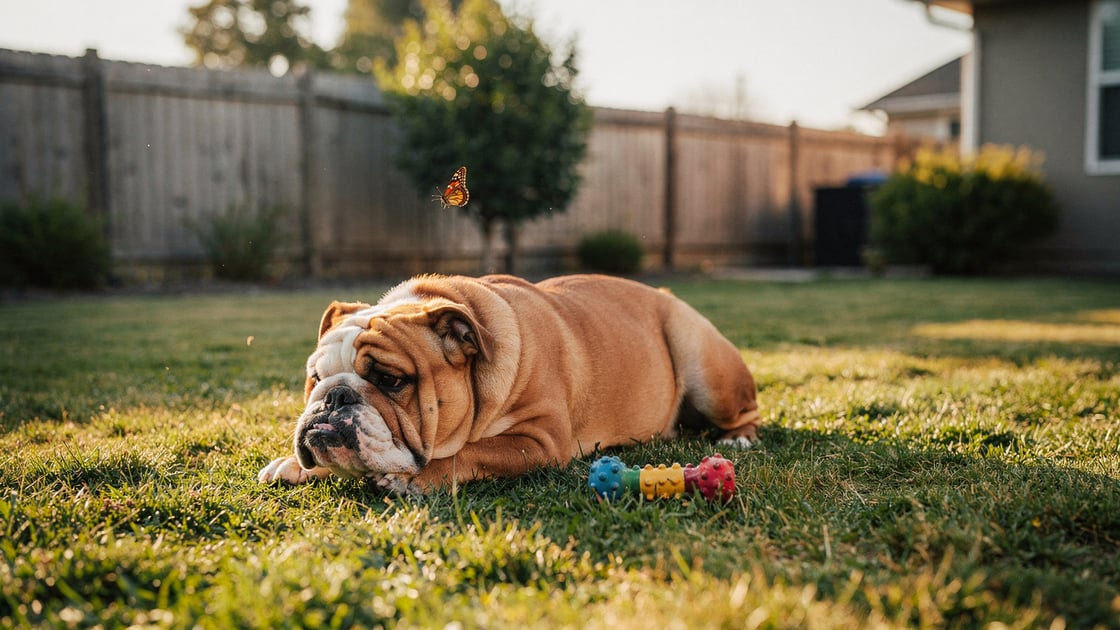
Dog Heat Stroke: 5 Warning Signs and Why Brachycephalic Breeds Die First
Dog heat stroke kills fast — body temperatures above 106°F cause irreversible organ damage within 15–30 minutes. Brachycephalic breeds (Frenchies, Bulldogs, Pugs) are at 5× the risk of other dogs. Here's what to watch for, what to do, and what kills most often.
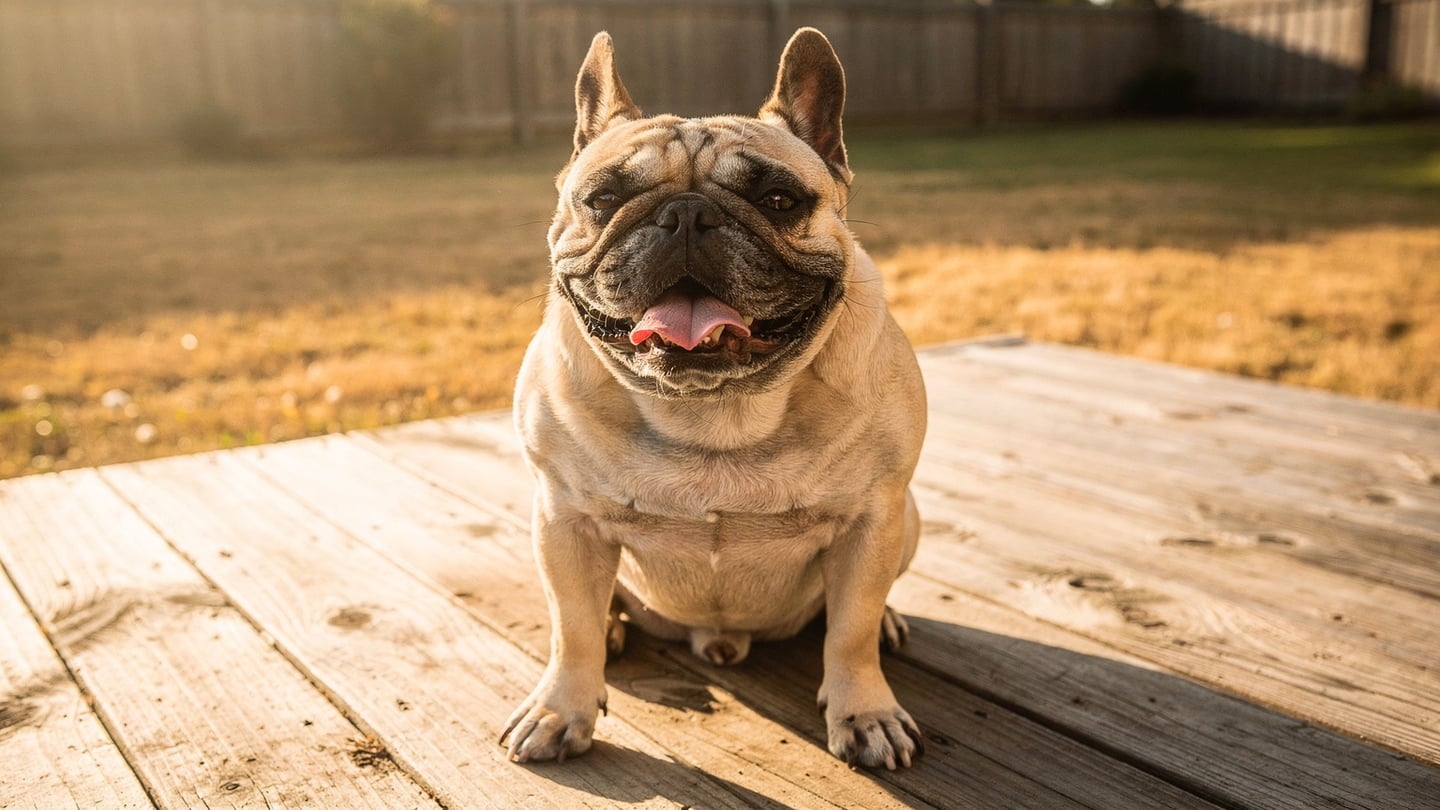
Heavy panting on a hot day looks normal. The line between "hot dog" and "dying dog" is body temperature, not visible behavior.
Why Heat Stroke Kills Dogs So Fast
Dogs don't sweat through their skin the way humans do. Their primary heat-dumping mechanism is panting — evaporating water from the tongue, mouth, and upper airway. When ambient temperature plus humidity overwhelms that system, the dog's core temperature climbs past 103°F (normal), then 104°F (heat stress), then 106°F (heat stroke begins), then 108°F+ (organ failure).
The dangerous window is narrow. From 106°F to 108°F can take 15–30 minutes on a hot day in a poorly ventilated environment. At 108°F, brain cells, kidney tubules, and the lining of the gut start dying. Even with aggressive emergency treatment, mortality of dogs presenting with severe heat stroke is reported between 30% and 50% in published veterinary literature.
This is why "I'll take my dog to the vet first thing tomorrow" is the wrong response to suspected heat stroke. Tomorrow doesn't exist for a dog at 109°F. The treatment window is measured in minutes, not hours.
Heat stroke is among the most preventable causes of canine death. The single biggest risk factor isn't the temperature outside — it's owner awareness of which dogs are at highest risk and what early warning signs actually look like.
5 Warning Signs You Cannot Miss
1. Panting that doesn't stop or slow down. Normal post-exercise panting eases within 5–10 minutes of rest in shade. Continued heavy panting after 15+ minutes of cooling is the first red flag. The tongue often hangs longer and more flatly than usual — a wide, paddle-like tongue is your warning.
2. Bright red or dark gums and tongue. Healthy gums are pink. In early heat stress they go bright red (vasodilation). In severe heat stroke they turn dusky purple or even bluish (poor oxygen delivery). Press your finger on the gum — color should return in 1–2 seconds. Slower than 3 seconds is bad.
3. Vomiting, diarrhea, or both — especially with blood. Heat stroke damages the gut lining, and bloody vomit or diarrhea is a sign the damage has already started. This is no longer "watch and wait" — this is the emergency vet, now.
4. Stumbling, weakness, collapse, or seizures. Neurological signs mean the brain is being affected by hyperthermia. Even if the dog seems to recover after collapsing, internal organ damage is already occurring. Always evaluate post-collapse heat events at a vet.
5. Body temperature above 104°F (40°C). If you can take the dog's temperature (rectal thermometer), 104°F+ confirms heat stress. 106°F+ is heat stroke. Don't waste time taking the temperature in a clearly distressed dog — start cooling and get to a vet.
Why Brachycephalic Breeds Are Hit Hardest
Brachycephalic dogs — French Bulldogs, English Bulldogs, Pugs, Boston Terriers, Boxers, Cavalier King Charles Spaniels — have shortened skulls and compressed airways. Their evaporative cooling system is fundamentally compromised because their main cooling mechanism (panting) is partially obstructed by their anatomy.
Multiple veterinary studies report brachycephalic breeds at significantly elevated risk of heat-related illness compared to mesocephalic (medium-skulled) and dolichocephalic (long-skulled) breeds. Estimated relative risk varies by study but consistently runs 3× to 5× higher for severe heat events. French Bulldogs in particular show in heat-stroke mortality statistics out of proportion to their population share.
This isn't a problem you can train around. A Frenchie's airway anatomy is what it is. The risk is structural. Owners of brachycephalic breeds need different rules: shorter walks, walks at dawn or dusk, no exercise above 75°F (24°C), no car rides without active climate control, and lower thresholds for vet evaluation when something seems off.
If you own a brachycephalic dog, the question isn't "will this dog get heat stroke at some point?" It's "will I recognize the early signs before the window closes?" The answer determines whether the dog reaches 12 or 6.
What To Do in the First 5 Minutes
1. Move the dog to shade or air conditioning immediately. Don't wait for the vet to suggest this — start cooling at the moment you suspect heat stroke. Inside an air-conditioned car is acceptable. The shaded back of a parked car is not — interior temperatures rise fast.
2. Wet the dog with cool (NOT cold, NOT ice-water) water. Tap water from a garden hose is ideal. Cold or ice water causes peripheral vasoconstriction that traps heat in the core — counterproductive. Lukewarm tap water cools effectively without the rebound effect.
3. Apply water to the belly, armpits, paws, and ears — these areas have the most surface blood vessels close to the skin and dump heat fastest. Don't pour gallons over the head; focus on the underside.
4. Get to an emergency vet during cooling, not after. Even if the dog seems to recover, internal damage may already be happening. Cooling is the bridge to vet care, not a substitute for it. Call ahead so the vet team is ready.
5. Monitor body temperature if you can. Stop active cooling when the dog reaches 103.5–104°F to avoid overshoot into hypothermia. The vet team will continue cooling under monitored conditions.
Prevention: The Rules That Actually Work
Never leave a dog in a parked car, even with windows cracked, even for 5 minutes, even on what feels like a mild day. Interior temperatures climb 20°F in 10 minutes on a 70°F day. Studies have documented dogs dying in parked cars on days that didn't feel hot to the owners.
Walk in early morning or late evening in summer. The pavement test: press the back of your hand on the asphalt for 5 seconds. If it's too hot for you, it's too hot for the dog's pads — and the air just above is hotter than the air at your face.
Provide constant access to cool water and shade. A dog left outside on a hot day with empty water bowl and no shade can decline catastrophically in 30–60 minutes. This is the most common scenario in heat-stroke vet emergencies — not active exercise, but passive exposure.
Brachycephalic breeds need stricter limits. No outdoor exercise above 75°F. No flights in cargo (most US airlines now ban brachycephalic breeds in cargo because of heat-related death rates). Air-conditioned spaces only when temperatures climb. The dogs adapt fine to these limits — owners often don't.
Common Questions
What temperature is dangerous for dogs?
How quickly does heat stroke kill a dog?
What should I do if I think my dog has heat stroke?
Why are bulldogs at higher risk for heat stroke?
Can I use ice water to cool a hot dog?
Sources
- A note on this research. This is not medical advice. Heat stroke is a same-minute emergency — if your dog shows the warning signs in this article, start cooling and call an emergency vet, do not wait to read more.
- Hall et al. (2020). Risk factors for severe and fatal heat-related illness in UK dogs — a VetCompass study. Scientific Reports.
- American Veterinary Medical Association — Heat stroke prevention and recognition guidance for dog owners.
- Merck Veterinary Manual — Heatstroke and Hyperthermia in Dogs.