Cataract Surgery for Dogs: $2,700–$5,000 Per Eye in 2026
Cataract surgery restores vision in most dogs and is one of the highest-success procedures in veterinary ophthalmology. The cost range is wide because the procedure includes more than the surgery itself — here's what's actually in the bill.
Cataract surgery success rate is reported above 90% in most studies — but the diagnostic workup before surgery costs almost as much as the surgery itself.
What Cataract Surgery Actually Involves
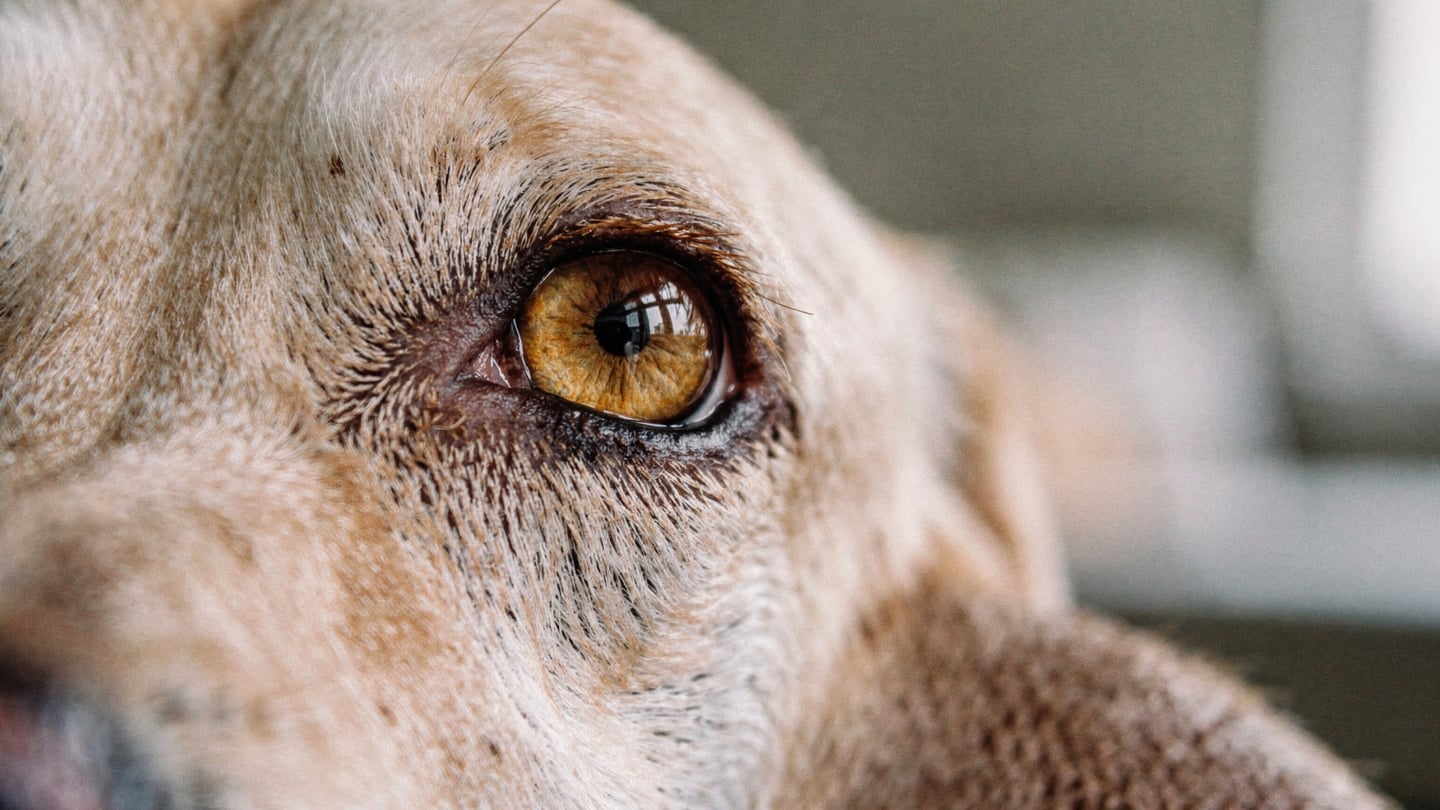
A cataract is a cloudy lens — the clear structure inside the eye that focuses light onto the retina. Cataracts can be congenital, age-related, or secondary to another condition (most commonly diabetes, which causes cataracts in roughly 75–80% of diabetic dogs within a year of diagnosis).
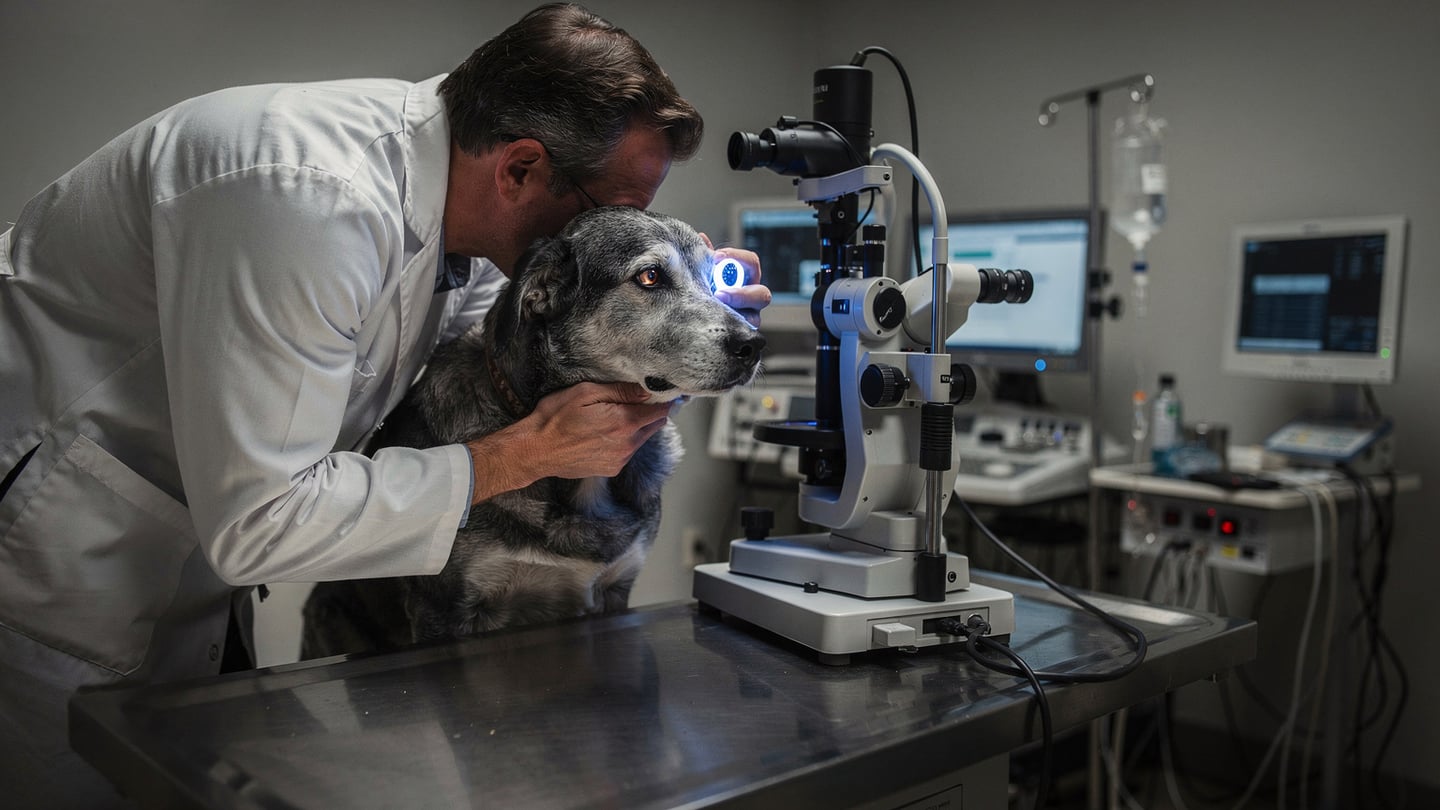
Cataract surgery in dogs is performed using phacoemulsification — the same technique used in human cataract surgery. The cloudy lens is broken up with ultrasound, removed, and replaced with a synthetic intraocular lens (IOL). The procedure takes 30–60 minutes per eye under general anesthesia.
Success rates are high. Veterinary ophthalmology literature consistently reports vision restoration in 85–95% of treated eyes when surgery is performed before the cataract progresses to chronic complications (uveitis, glaucoma, retinal detachment). Outcomes drop significantly when surgery is delayed past the "hypermature" stage.
Not every dog with cataracts is a surgical candidate. Pre-surgical electroretinogram (ERG) confirms the retina still functions. Dogs with concurrent retinal disease (PRA), uncontrolled diabetes, or other systemic disease may not benefit from surgery.
What's Actually in the Bill
Pre-surgical workup ($800–$1,500): board-certified veterinary ophthalmologist consultation ($200–$400), electroretinogram to confirm retinal function ($300–$500), ocular ultrasound to check internal eye structures ($150–$300), preoperative bloodwork and chest X-rays ($150–$300). All of this happens before surgery is scheduled.
The surgery itself ($1,800–$3,000 per eye): includes the surgical procedure, the intraocular lens implant, and same-day hospitalization. Anesthesia and surgical team time are the main cost drivers. Most ophthalmologists do both eyes in the same session if both have cataracts (saves one anesthesia event).
Post-operative care ($300–$600): follow-up exams at 1 day, 1 week, 2 weeks, 4 weeks, and 3 months post-op. Eye drops (anti-inflammatory, antibiotic, glaucoma prevention) for 4–6 weeks at $80–$150 per medication. E-collar, restricted activity for 2 weeks.
Total realistic budget: $2,700–$5,000 per eye, all-in. Both eyes together typically $5,000–$8,500 because some workup costs don't double. Major metro specialty hospitals often run higher; smaller markets sometimes lower. Always get a written itemized estimate.
Regional Pricing Variation
Major metros (NYC, LA, SF, Boston): $4,500–$7,000 per eye is common at top specialty hospitals. The premium reflects board-certified ophthalmologist availability, advanced equipment, and operating costs in expensive real estate markets.
Mid-tier metros (Denver, Atlanta, Phoenix): $3,000–$5,000 per eye at specialty hospitals or veterinary teaching hospitals attached to universities.
Smaller markets: $2,500–$4,000 per eye when a board-certified ophthalmologist is available locally. Some smaller markets have no resident ophthalmologist — you may need to travel 2–4 hours to a specialty center.
Veterinary teaching hospitals (UC Davis, Cornell, Penn, Texas A&M, etc.) often charge moderately less than private specialty hospitals because residents perform some procedures under faculty supervision. Quality is generally excellent; scheduling can be slower.
The Diabetic Dog Pathway
Diabetic dogs almost universally develop cataracts. Around 75–80% develop cataracts within 12 months of diagnosis; nearly all develop them within 18 months. The mechanism is sorbitol accumulation in the lens — directly tied to chronic hyperglycemia.
Surgery decision in diabetic dogs requires stable glucose control first. Most surgeons require 3–6 months of stable insulin management before surgery to reduce post-operative complications. A diabetic dog with bouncing glucose is a higher-risk surgical candidate.
Insurance coverage for diabetic cataracts is often complicated. If your dog was diagnosed with diabetes before insurance enrollment, the diabetes is pre-existing. Cataracts secondary to that diabetes are typically also excluded as a related condition. Related-condition exclusions apply across most US insurers.
Without surgery, diabetic cataracts often progress to lens-induced uveitis and glaucoma within 1–2 years. Many diabetic dogs lose painful eyes (requiring enucleation, $800–$2,000 per eye) when cataract surgery isn't pursued. The economics often favor surgery despite the upfront cost.
Is Surgery Worth It?
Yes, for most candidates. Cataract surgery success rates above 85%, restored vision, and avoidance of secondary complications (uveitis, glaucoma, eventual enucleation) make this one of the higher-value procedures in veterinary medicine.
Less clear cases: very senior dogs (over 12) with concurrent serious disease, dogs with confirmed retinal degeneration on ERG, dogs whose cataracts are stable and not causing complications. For these, monitoring without surgery may be appropriate.
Without surgery, the realistic alternative is gradual blindness with environmental adaptation. Many dogs adapt remarkably well to vision loss because their other senses (smell, hearing) compensate. The ethical question is whether the dog's quality of life truly suffers without sight — many owners overestimate the impact.
The financial frame: $5,000–$8,000 for both eyes versus a lifetime of managing complications and potentially enucleating one or both eyes ($1,600–$4,000 plus chronic medication). The numbers often favor surgery if the dog is otherwise healthy and likely to live 5+ more years.
Common Questions
How much does cataract surgery for a dog cost?
Is cataract surgery successful in dogs?
Will pet insurance cover cataract surgery?
Can my regular vet do cataract surgery?
What happens if I don't do cataract surgery?
Sources
- A note on this research. This is not medical advice. Cataract surgery decisions should be made with a board-certified veterinary ophthalmologist (DACVO), not based on a blog post. Cost ranges here are typical US 2026 values and vary significantly by region.
- American College of Veterinary Ophthalmologists (ACVO) — public information on cataracts and cataract surgery in dogs.
- Cornell University College of Veterinary Medicine — Riney Canine Health Center, ocular disease references.
- Merck Veterinary Manual — Cataracts in animals (mechanisms, types, surgical considerations).