Disease Guide ·Ringworm ·2026

Ringworm in Cats — symptoms, vet costs & insurance

Ringworm is a highly contagious fungal skin infection — not a worm — common in kittens. Treatment costs $200-$600 over 2-4 months. It spreads to humans and other pets (zoonotic). In homes with kittens or immunocompromised people, aggressive treatment and environmental decontamination are essential.

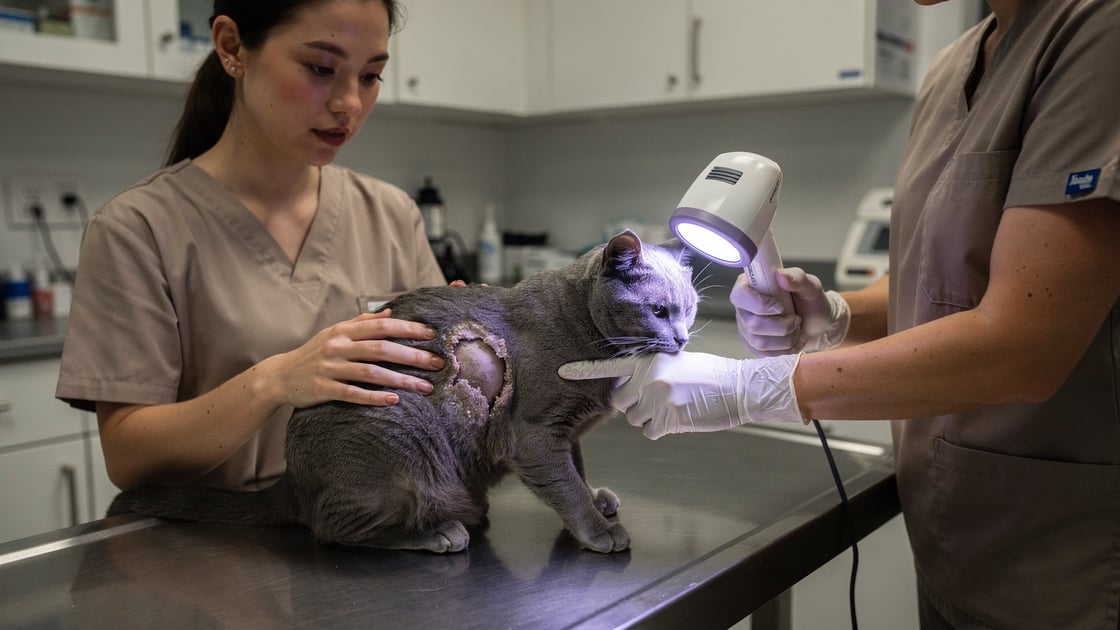
Veterinarian using Wood's lamp to diagnose feline ringworm in clinic
Ringworm in cats — real vet costs and insurance guide.
01/04
Key Facts & Real Vet Costs

What Causes Ringworm

Dermatophyte fungi, not worms. Microsporum canis causes ~90% of feline cases. Spreads via direct contact with infected animals or contaminated objects. Kittens, Persians, immunocompromised cats, and multi-cat homes are most susceptible. Spores survive 12-18 months in the environment.

Symptoms — Circular Hair Loss

Circular, scaly patches on face, ears, paws with reddish raised edges. Kittens often have widespread lesions. Many cats — especially longhaired breeds — are asymptomatic carriers, invisible but contagious. Nails may become brittle. Many cats show no symptoms at all.

Diagnosis — $100-$300

Wood's lamp unreliable (only ~50% fluoresce). Fungal culture is gold standard ($80-$150, 7-21 days). Trichogram: fast but less sensitive ($50-$100). PCR: faster and more sensitive ($100-$200).

Treatment — $200-$600

Topical: lime sulfur dips ($30-$60) or antifungal shampoo ($20-$40). Oral: itraconazole or terbinafine ($20-$60/month) for 4-8 weeks. Clip hair, decontaminate with dilute bleach (1:10), treat all pets. Continue until two negative cultures confirm resolution.

Total Cost — $200-$600

Diagnosis + 6-8 weeks of treatment + follow-up cultures. Multi-cat households: add $100-$200 per additional cat for treatment and follow-up.

Breed Risk — Persians & Kittens

Persians and other longhaired breeds are significantly overrepresented. Kittens (immature immune system) and cats with FIV, FeLV, or on immunosuppressive medications are at highest risk.

Duration — 2-4 Months

Treatment takes a minimum of 6-8 weeks; many cases require 3-4 months for complete resolution. Stopping treatment too early is the most common cause of relapse. Two negative cultures confirm resolution.

Prevention — Zoonotic Risk

Quarantine new kittens/cats for 2 weeks. Check all cats from shelters or breeders. Ringworm is contagious to humans — wash hands after handling infected cats. Immunocompromised people should minimize contact with infected animals.

02/04

The Real Cost

Diagnosis + 8-week treatment course + follow-up cultures.

Diagnosis$100-$300 Treatment (8 weeks)$150-$400 Total Cost$200-$600
$400typical cost
03/04
Insurance Traps A very common condition — understanding the insurance nuances matters for multi-cat homes.
Red flag · Coverage

Coverage Basics

Ringworm is covered as an illness by most policies. Includes diagnosis, oral/topical antifungals, and follow-up cultures. In multi-cat homes, each cat's policy covers its own treatment. Environmental decontamination supplies: not covered.


Red flag · Pre-existing

Prior Skin Condition Trap

Any documented skin lesions or hair loss before enrollment may trigger denial if the insurer links it to pre-existing conditions — especially risky for Persians with ongoing skin issues. Enroll when your cat is healthy and lesion-free.

Red flag · Waiting period

Kitten Enrollment Timing

Shelter and breeder kittens often arrive with ringworm, before you get home. The standard 14-day illness waiting period means it's typically not covered. Enroll the day you bring your kitten home for coverage after the waiting period expires.

Red flag · Deductible

Cost vs Deductible

At $200-$600, ringworm is moderate-cost. With a $250 deductible, net reimbursement is modest. Annual deductibles (not per-incident) make claims worthwhile when combined with other illnesses.

Pet Insurance Due Diligence Workbook
Happy readers

Happy readers

🇺🇸 US Pet Insurance Guide

Pet Insurance Worksheet

Not a book. Not a course. One printable worksheet that walks you through the exact questions and red flags — so you know what you're signing before you sign it. Takes 10 minutes. Saves you thousands.

Download the Worksheet

Instant PDF. Print it, fill it out, bring it to your insurer call.

04/04
Common Questions Real answers about ringworm diagnosis, treatment, and insurance coverage.
0Is ringworm actually a worm?
No — it's a fungal infection, not a worm. The name comes from the circular skin lesion that resembles a ring. Dermatophytes (skin fungi) cause it. Microsporum canis causes ~90% of feline cases; Microsporum gypseum and Trichophyton species cause the rest.
1How do cats get ringworm?
Direct contact with infected animals, people, or contaminated objects. Spores survive 12-18 months. Shelter kittens often arrive infected. Multi-cat homes, catteries, and outdoor cats are at highest risk. Quarantine new cats 2 weeks before introducing them to residents.
2Can humans catch ringworm from cats?
Yes — ringworm is zoonotic. Microsporum canis causes human scalp (tinea capitis) and body ringworm (tinea corporis). Children and immunocompromised people are most susceptible. Wash hands after handling infected cats. Don't share bedding or brushes.
3What does ringworm look like in cats?
Circular, scaly patches on face, ears, paws with reddish raised edges. Many cats — especially Persians — are asymptomatic carriers with no visible lesions. Kittens have widespread irregular lesions. Any unexplained hair loss warrants a fungal culture.
4How long does ringworm treatment take in cats?
Minimum 6-8 weeks; Persians and longhaired breeds often need 3-4 months. Continue until two negative cultures (2 weeks apart) confirm resolution. Early stopping causes relapse. Environmental decontamination throughout prevents reinfection.
5How much does ringworm treatment cost for cats?
Diagnosis: $80-$150. Topical treatment: $30-$80/month. Oral antifungals: $20-$60/month. Follow-up cultures: $80-$150 each. Total: $200-$600 per cat. Multi-cat homes multiply by number of cats.
6Do I have to treat the environment too?
Yes — spores contaminate surfaces and reinfect for up to 18 months. Vacuum immediately and dispose of bags. Wipe hard surfaces with dilute bleach (1:10). Hot-wash bedding on high heat. Replace or bleach-clean grooming tools.
7Can ringworm go away on its own in cats?
Healthy adults may self-resolve in 2-4 months — but treatment is strongly recommended. Cats stay contagious throughout active infection. Kittens, seniors, and immunocompromised cats rarely clear it without treatment. Treating shortens the contagious period.
8Is ringworm worse in kittens?
Yes — kittens' developing immune systems make them far more vulnerable. Ringworm spreads rapidly. Shelter and cattery kittens are at high risk. Patchy hair loss or crusty lesions warrant immediate vet visits — kittens need aggressive treatment and spread faster.
9Does pet insurance cover ringworm treatment?
Most policies cover as illness — diagnosis, antifungals, follow-up cultures. Key traps: shelter kittens arrive infected (pre-existing if within waiting period); prior documented skin lesions trigger denial; decontamination supplies not covered. Enroll kittens on day one.
Marcel Janik, founder of RealVetCost

I'm a dog owner who got burned

My mother-in-law took her German boxer to the veterinary emergency room — $1,200 in tests, no answers. A different vet solved it in minutes with $8 pills.

That moment stuck with me. When you're scared, you'll pay anything — and some vets price accordingly. I dug into vet costs and insurance. Confusing policies, buried exclusions, impossible to compare. So I built the resource I wish existed: real costs, real exclusions, plain language. Not here to sell you a policy. Here so you don't get blindsided.