Disease Guide ·Glaucoma ·2026

Glaucoma in Cats — symptoms, vet costs & insurance

Glaucoma in cats causes dangerously elevated eye pressure that destroys the optic nerve. Most have secondary glaucoma from uveitis or intraocular tumors. Pressure-control medications cost $50-$150/month. Primary glaucoma is rare in cats. Intraocular melanoma—the most common intraocular tumor in cats—requires early enucleation to prevent metastasis.

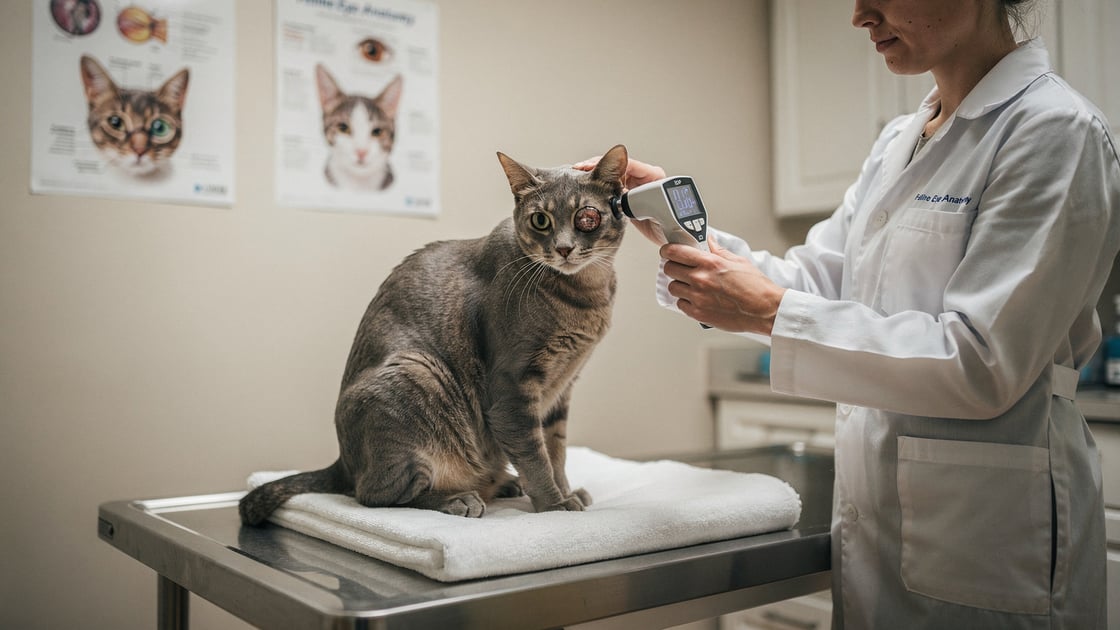
Veterinary ophthalmologist measuring feline intraocular pressure with tonometer
Glaucoma in cats — real vet costs and insurance guide.
01/04
Key Facts & Real Vet Costs

What Causes Glaucoma in Cats

Primary glaucoma is rare in cats. Secondary: uveitis (FIV, FIP, toxoplasmosis, FHV-1, or lymphoma), intraocular melanoma, lens luxation, iris prolapse. Elevated pressure (>25 mmHg) rapidly damages optic nerve and retina. Secondary to uveitis or intraocular tumor

Symptoms — Often Subtle in Cats

Cats hide pain well—symptoms subtle until severe. Signs: fixed dilated pupil unresponsive to light, corneal cloudiness, enlarged globe (buphthalmos), lethargy, reduced appetite. Red inflamed eyes suggest concurrent uveitis. Blindness may go unnoticed in indoor cats. Dilated unresponsive pupil—first noticed sign

Diagnosis — $200-$500

Tonometry (handheld tonometer, $50-$100): Normal IOP in cats 15-25 mmHg; >25 mmHg abnormal; >30 mmHg urgent. Gonioscopy assesses drainage angle. Ocular ultrasound ($150-$300) evaluates intraocular masses. Anterior segment exam for uveitis. Systemic workup: blood panel, FIV/FeLV testing ($100-$200). Tonometry is key diagnostic test

Treatment — $50-$150/Month

Topical carbonic anhydrase inhibitors (dorzolamide, $30-$60/month), beta-blockers (timolol, $15-$30/month), or prostaglandin analogs (latanoprost—use cautiously in cats). Treat underlying uveitis with corticosteroids or NSAIDs. Intraocular melanoma: enucleation ($800-$1,500) prevents metastasis (~20% of cats). Pain-relieving enucleation for blind eyes: $800-$1,500. $50-$150/month drops or $800-$1,500 enucleation

Total Cost — Variable

Medical management: $600-$1,500/year for drops and monitoring. Enucleation: $800-$1,500 one-time. Surgical shunt: $1,500-$3,000.

Breed Risk — Siamese, Burmese

Siamese and Burmese cats have higher reported rates of primary glaucoma. Any breed at risk for uveitis (FIV-positive, FIP-exposed) is at risk for secondary glaucoma.

Prognosis — Guarded

Vision preservation is difficult once IOP is severely elevated. Goal is often pain control and preventing the second eye from being affected. Secondary glaucoma prognosis depends on underlying cause.

Monitoring

Annual IOP measurement for at-risk breeds (Siamese, Burmese). Monitor both eyes — second eye involvement in primary glaucoma is common. Regular fundic exams detect early optic nerve damage.

02/04

The Real Cost

Diagnosis + first year of medical management.

Diagnosis$200-$500 Annual medications$600-$1,500 Enucleation (if needed)$800-$1,500
$900typical annual cost
03/04
Insurance Traps Glaucoma is a chronic condition — understanding how insurance handles it matters.
Red flag · Coverage

Coverage Basics

Glaucoma is covered by most accident and illness policies as an illness. Coverage includes tonometry, diagnostics, medications, and surgery (enucleation if medically indicated). If uveitis is underlying cause, both conditions covered. Enucleation to prevent melanoma metastasis is medically necessary and typically covered.

Red flag · Pre-existing

Uveitis Pre-existing Trap

Any documented uveitis, eye inflammation, or chronic eye issues before enrollment means secondary glaucoma may be denied as pre-existing. FIV-positive cats are higher uveitis risk—documented positive FIV status plus later glaucoma creates grounds for denial.

Red flag · Exclusion

Chronic Condition Exclusion

Glaucoma requires lifelong management—monthly drops, regular pressure checks, periodic ophthalmology visits. Some policies have lifetime or annual per-condition limits capping coverage for ongoing chronic conditions. Verify no per-condition cap cuts off coverage after first year.

Red flag · Cancer

Intraocular Melanoma Coverage

When glaucoma is caused by intraocular melanoma, it becomes a cancer claim. Most cover cancer treatment including enucleation. However, cancer-specific waiting periods (up to 30 days) and cancer sub-limits may apply. Confirm cancer coverage before melanoma diagnosis.

Pet Insurance Due Diligence Workbook
Happy readers

Happy readers

🇺🇸 US Pet Insurance Guide

Pet Insurance Worksheet

Not a book. Not a course. One printable worksheet that walks you through the exact questions and red flags — so you know what you're signing before you sign it. Takes 10 minutes. Saves you thousands.

Download the Worksheet

Instant PDF. Print it, fill it out, bring it to your insurer call.

04/04
Common Questions Real answers about glaucoma diagnosis, treatment, and insurance coverage.
0What causes glaucoma in cats?
Primary (inherited) glaucoma is uncommon in cats. Most is secondary—caused by conditions blocking aqueous humor drainage. Common causes: uveitis (from FIV, FIP, toxoplasmosis, FHV-1) and intraocular melanoma (iris tumor blocking drainage). Lens luxation and iris prolapse less common.
1What are the signs of glaucoma in cats?
Fixed dilated pupil unresponsive to light is often first sign. Other symptoms: corneal cloudiness, eye pain (squinting, reduced appetite), reduced visual responses, enlarged globe (buphthalmos). Cats hide pain well—condition can be advanced before noticed. Annual tonometry important for early detection.
2What is intraocular melanoma in cats?
Most common primary intraocular tumor in cats. Starts flat, brown-black iris discoloration, spreads slowly. Unlike humans, metastasizes in ~20% of cats (liver, lungs, lymph nodes). Early enucleation when confined prevents metastasis. Iris "freckles" monitored every 3-6 months for growth.
3How is glaucoma treated in cats?
Topical drops: carbonic anhydrase inhibitors (dorzolamide), beta-blockers (timolol), or prostaglandin analogs. Treat underlying uveitis with anti-inflammatory drops or systemic medication. Blind/painful eyes or intraocular melanoma: enucleation (eye removal) recommended. Cats adapt well to one eye.
4Will my cat go blind from glaucoma?
Vision preservation possible with early diagnosis and aggressive management. Secondary feline glaucoma often progresses despite treatment—prognosis for vision is guarded. Many cats blind in affected eye by diagnosis. Priority: pain control and preserving second eye. Cats adjust to monocular vision.
5What is enucleation and how much does it cost?
Surgical eye removal. Recommended when: eye blind and painful, intraocular melanoma present (prevent metastasis), severe trauma destroys eye. Costs $800-$1,500, general anesthesia, 10-14 day recovery. Eyelids sutured closed. Quality of life improves dramatically after removing painful eye.
6Which cat breeds are most prone to glaucoma?
Siamese and Burmese have highest rates of primary glaucoma. Any cat with uveitis history—FIV, FIP, toxoplasmosis, herpesvirus—at elevated risk for secondary glaucoma. Older cats at higher risk for intraocular melanoma. Annual tonometry recommended for Siamese/Burmese over age 6.
7Does pet insurance cover glaucoma treatment in cats?
Most accident and illness policies cover glaucoma—medications, monitoring, enucleation. Coverage traps: (1) Pre-existing if uveitis documented before enrollment; (2) FIV-positive cats may face uveitis exclusions; (3) Cancer terms apply if melanoma causes glaucoma; (4) Chronic care may hit per-condition or annual limits.
Marcel Janik, founder of RealVetCost

I'm a dog owner who got burned

My mother-in-law took her German boxer to the veterinary emergency room — $1,200 in tests, no answers. A different vet solved it in minutes with $8 pills.

That moment stuck with me. When you're scared, you'll pay anything — and some vets price accordingly. I dug into vet costs and insurance. Confusing policies, buried exclusions, impossible to compare. So I built the resource I wish existed: real costs, real exclusions, plain language. Not here to sell you a policy. Here so you don't get blindsided.