Disease Guide ·Corneal Ulcers ·2026

Corneal Ulcers in Cats — symptoms, vet costs & insurance

Corneal ulcers cost $200-$500 for simple cases, up to $1,500-$3,000 for deep ulcers threatening vision. Most are caused by feline herpesvirus (FHV-1). Superficial ulcers heal in days with medication; deep ulcers are emergencies. Brachycephalic cats (Persians, Himalayans) are highest risk.

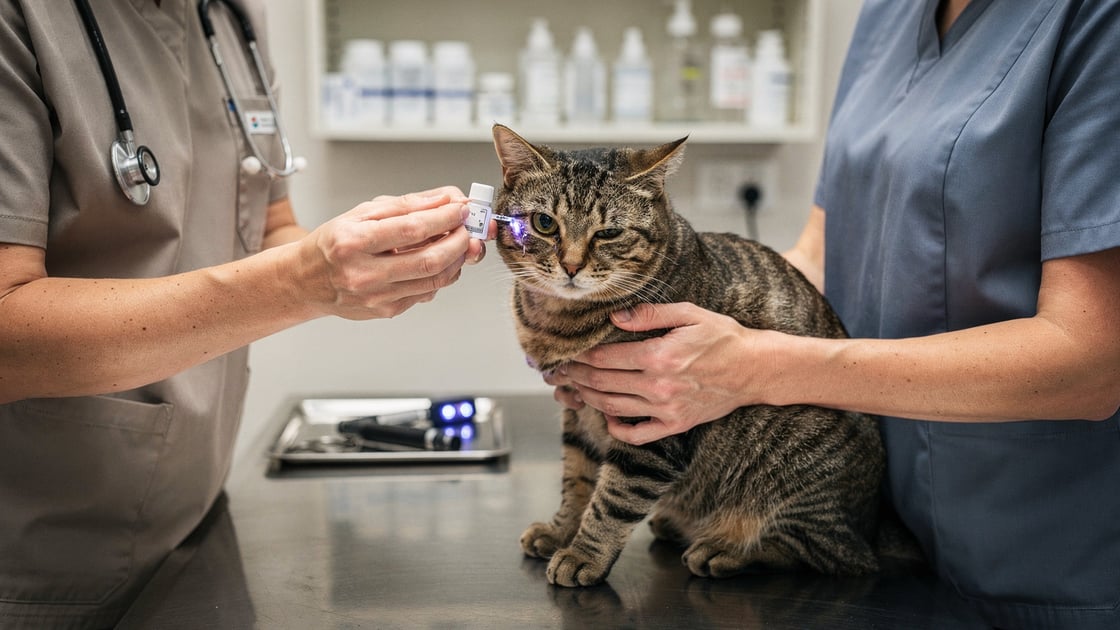
Veterinarian applying fluorescein stain to diagnose a feline eye ulcer
Corneal ulcers in cats — real vet costs and insurance guide.
01/04
Key Facts & Real Vet Costs

What Causes Corneal Ulcers

FHV-1 (feline herpesvirus) damages corneal epithelial cells, creating dendritic ulcers. Other causes: trauma, entropion (inward-rolling eyelids), conjunctivitis, dry eye, steroid overuse. Brachycephalic cats are prone due to prominent, shallowly set eyes.

Symptoms — Painful Eye

Squinting or holding the eye shut. Excessive tearing or discharge. Pawing at the eye. Hazy or cloudy cornea with visible defect. Red surrounding tissue. In deep ulcers: sunken appearance or visible stromal loss. Blue-gray corneal haze indicates edema.

Diagnosis — $150-$350

Fluorescein stain ($50-$100) makes ulcers glow green under UV light. Slit-lamp exam assesses depth. Schirmer tear test ($30-$50) for dry eye. Culture ($100-$200) for infected ulcers. PCR confirms FHV-1. Specialist exam: $100-$150.

Treatment — $200-$3,000

Superficial: antibiotic drops + pain control ($200-$500). FHV-1: antiviral drops ($30-$60/week) + oral famciclovir ($30-$60/month) + L-lysine. Deep stromal ulcers: ophthalmologist referral, conjunctival graft surgery ($1,500-$3,000). Descemetocele is an emergency.

Total Cost — $200-$3,000

Superficial FHV-1 ulcer: $200-$500 for diagnosis and medication. Deep or surgical ulcer: $1,500-$3,000+ at an ophthalmology specialist.

Breed Risk — Brachycephalic Cats

Persians, Himalayans, Exotics, and other flat-faced breeds have highest risk due to prominent eyes and reduced corneal protection. Any cat with FHV-1 history is predisposed to recurrence.

Healing — Days to Weeks

Simple superficial ulcers heal in 5-7 days with treatment. Deep or stromal ulcers: 2-4 weeks. Recurrence is common with FHV-1 — up to 45% of cats experience recurrent episodes under stress.

Prevention

Vaccinate against FHV-1 (core vaccine reduces severity, not infection). Manage stress (main FHV-1 reactivation trigger). Daily L-lysine supplementation for FHV-1-positive cats. No touching the eyes with unclean hands.

02/04

The Real Cost

Fluorescein exam + antiviral drops + pain control.

Diagnosis$150-$350 Treatment (simple)$100-$250 Surgery (deep ulcer)$1,500-$3,000
$350typical cost
03/04
Insurance Traps Corneal ulcers in cats — especially FHV-1 — are recurring. Here's how insurance handles them.
Red flag · Coverage

Coverage Basics

Corneal ulcers are covered as illness/injury by most policies. Coverage includes exams, fluorescein testing, antiviral/antibiotic meds, and surgical repair. Ophthalmology referrals are typically covered. Important for Persian and brachycephalic cat owners.


Red flag · Pre-existing

FHV-1 Chronic Carrier Trap

FHV-1 is lifelong — cats are permanent carriers. Any documented pre-enrollment eye problems, conjunctivitis, or upper respiratory infection may trigger FHV-1 exclusions on future ulcer claims as pre-existing. This trap affects many cats with prior kitten URIs.

Red flag · Exclusion

Recurrence Exclusion

FHV-1 ulcers recur as the virus reactivates under stress. After first claim, some policies exclude recurrences as chronic pre-existing. Curable condition clauses may stop covering FHV-1 after initial recovery. Check your policy's recurrence and chronic language.

Red flag · Breed

Brachycephalic Breed Exclusions

Some insurers apply breed-specific exclusions for anatomically predisposed conditions. Persians and Himalayans may have eye conditions entirely excluded. Confirm corneal/eye coverage for flat-faced breeds before enrolling.

Pet Insurance Due Diligence Workbook
Happy readers

Happy readers

🇺🇸 US Pet Insurance Guide

Pet Insurance Worksheet

Not a book. Not a course. One printable worksheet that walks you through the exact questions and red flags — so you know what you're signing before you sign it. Takes 10 minutes. Saves you thousands.

Download the Worksheet

Instant PDF. Print it, fill it out, bring it to your insurer call.

04/04
Common Questions Real answers about corneal ulcers, FHV-1, and insurance coverage.
0What causes corneal ulcers in cats?
FHV-1 is the most common cause — it destroys corneal epithelial cells, creating dendritic ulcers. Other causes: trauma, entropion (inward-rolling eyelids), dry eye, chemical exposure, steroid overuse. Brachycephalic cats are structurally vulnerable due to prominent eyes.
1How do I know if my cat has a corneal ulcer?
Persistent squinting or holding one eye shut, excessive tearing, pawing at the eye, visible cloudiness on the eye surface, red surrounding tissue. Ulcers worsen rapidly — any cat showing these signs needs prompt vet exam. Fluorescein stain confirms diagnosis in minutes.
2How much does corneal ulcer treatment cost in cats?
Superficial: exam, fluorescein test, drops, pain control total $200-$500. FHV-1 antivirals add $100-$200/month. Deep stromal ulcers with ophthalmologist and surgery: $1,500-$3,000+. Descemetocele is the most expensive emergency.
3Do corneal ulcers in cats heal on their own?
Superficial ulcers may begin healing without treatment, but this is risky. Without antibiotics, ulcers become infected and progress rapidly. Without antivirals for FHV-1, the virus damages the cornea further. Treat under veterinary supervision. Simple ulcers heal in 5-7 days with proper treatment.
4Can FHV-1 corneal ulcers come back?
Yes — FHV-1 is lifelong and reactivates under stress (illness, vet visits, new pets, moving). About 45% of positive cats experience recurrent eye problems. Daily L-lysine supplementation may reduce recurrence. Some cats need long-term management.
5Which cats are most prone to corneal ulcers?
Brachycephalic cats — Persians, Himalayans, Exotic Shorthairs — are most at risk. Shallow orbits and prominent eyes that don't fully close expose the cornea to drying and trauma. Any cat infected with FHV-1 is a lifelong carrier prone to recurrent eye disease.
6What is a descemetocele and why is it an emergency?
Erosion through all corneal layers down to Descemet's membrane — the thinnest layer separating the eye's interior from the environment. If it ruptures, eye contents prolapse and the eye is lost. Requires immediate surgery (conjunctival graft or transposition). Same-day ophthalmology referral needed.
7Does pet insurance cover corneal ulcers in cats?
Most policies cover corneal ulcers — antiviral meds, specialist referral, surgery included. Key traps: prior URI or eye issues = FHV-1 claims excluded as pre-existing; brachycephalic breeds may have eye conditions excluded; recurrent FHV-1 may be treated as chronic after first claim.
Marcel Janik, founder of RealVetCost

I'm a dog owner who got burned

My mother-in-law took her German boxer to the veterinary emergency room — $1,200 in tests, no answers. A different vet solved it in minutes with $8 pills.

That moment stuck with me. When you're scared, you'll pay anything — and some vets price accordingly. I dug into vet costs and insurance. Confusing policies, buried exclusions, impossible to compare. So I built the resource I wish existed: real costs, real exclusions, plain language. Not here to sell you a policy. Here so you don't get blindsided.