Disease Guide ·Bladder Stones ·2026

Bladder Stones in Cats — symptoms, vet costs & insurance

Bladder stones form when minerals crystallize — calcium oxalate requires surgery ($1,500-$3,000), struvite can dissolve with prescription diet (4-12 weeks). Most cat struvite stones form without infection. Calcium oxalate is increasingly common in middle-aged to older cats. Untreated stones can cause urethral obstruction — life-threatening in males.

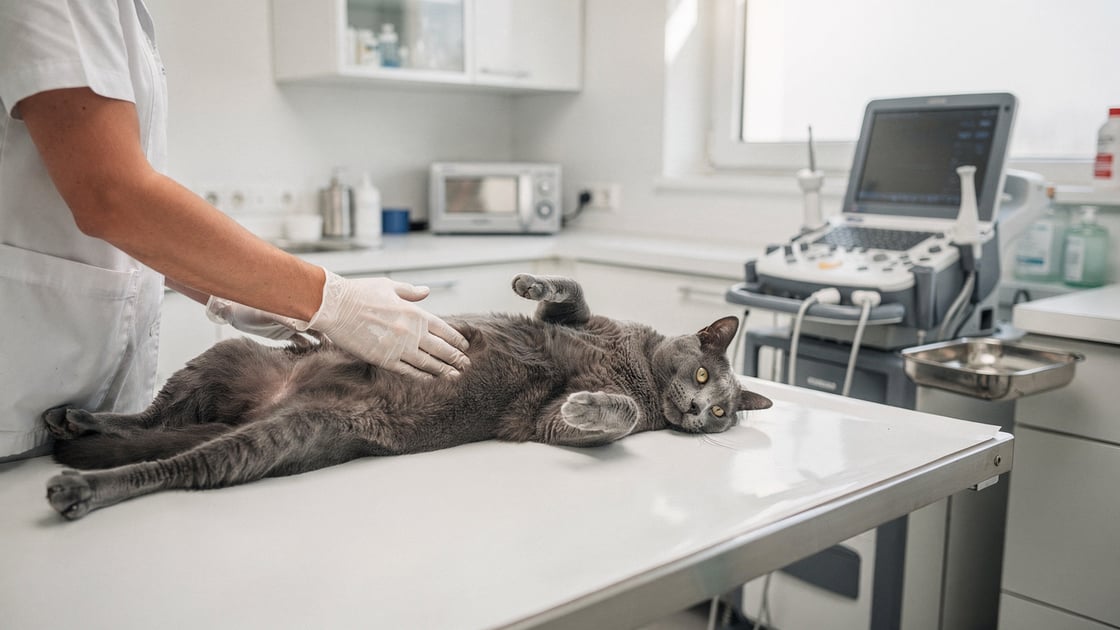
Veterinarian examining a cat with bladder stones using ultrasound in a clinic
Bladder stones in cats — real vet costs and insurance guide.
01/04
Key Facts & Real Vet Costs

Types of Bladder Stones

Struvite: most common in younger cats, alkaline high-magnesium urine, sterile (no infection). Dissolves with acidifying diet in 4-12 weeks. Calcium oxalate: middle-aged to older cats, cannot dissolve, always requires surgery. Hypercalcemia increases risk. Struvite = dissolvable; calcium oxalate = requires surgery

Symptoms

Straining to urinate, little or no output. Blood in urine (pink, red, rusty). Frequent box trips, crying while urinating, excessive genital licking, urinating outside box, decreased appetite. In males: sudden inability to urinate = urethral obstruction emergency. Straining + blood in males = immediate emergency

Diagnosis — $200-$500

X-rays ($150-$300): most stones visible. Ultrasound ($200-$400): small stones, bladder wall assessment. Urinalysis ($50-$100): pH, crystals, blood cells. Urine culture ($80-$150): rule out infection. Stone analysis after removal confirms composition. X-ray + urinalysis = standard initial workup

Treatment — $200-$3,000

Struvite: prescription dissolution diet ($60-$120/month, 4-12 weeks), recheck X-ray confirms dissolution. Calcium oxalate: cystotomy ($1,500-$3,000). Urohydropropulsion for tiny smooth stones ($300-$600). Both: wet food and fountains reduce recurrence. Prevention diet: $60-$120/month ongoing. Surgery $1,500-$3,000 for calcium oxalate

Total Cost — $400-$3,500

Struvite dissolution: $400-$800. Calcium oxalate surgery: $2,000-$3,500. Long-term prevention diet: $60-$120/month ongoing.

Breed Risk — Persians, Ragdolls

Persians, Himalayans, Ragdolls, and British Shorthairs have higher calcium oxalate risk. Male cats at higher risk for urethral obstruction. Overweight cats are predisposed.

Recurrence — High Without Prevention

Calcium oxalate recurrence rate without prevention: ~7% within 3 years (Albasan 2009). Struvite recurrence: ~10-20% with dietary management. Lifelong prevention diet + water intake is critical.

Prevention

Feed wet food or add water to food (increases urine dilution). Urinary prescription diets for cats with history. Regular veterinary checks for at-risk breeds. Weight management. Fresh water access at all times — consider a drinking fountain.

02/04

The Real Cost

Cystotomy for calcium oxalate stones + follow-up.

Diagnosis$200-$500 Struvite dissolution$200-$600 Surgery (CaOx)$1,500-$3,000
$2,000typical cost (surgery)
03/04
Insurance Traps Bladder stones — especially in cats with prior urinary issues — carry significant coverage risks.
Red flag · Coverage

Coverage Basics

Bladder stones covered by most accident/illness policies. Coverage includes diagnostics, dietary dissolution, surgery (cystotomy), and emergency care for urethral obstruction. Real benefit: cystotomy plus workup easily reaches $3,000-$4,000.


Red flag · Pre-existing

FLUTD / Urinary History Pre-existing Trap

Any documented FLUTD, UTI, crystals, or straining before enrollment excludes all urinary conditions as pre-existing. Crystals alone on urinalysis create grounds for stone claim denial. Enroll before any urinary issue is documented.

Red flag · Chronic

Recurrent Stones Exclusion

Stones recur, especially calcium oxalate (~7% without prevention). After first claim, recurring episodes become chronic pre-existing. Some policies cover recurrence with annual deductibles; others cap total urinary coverage. Check chronic recurrence language carefully.

Red flag · Diet

Prescription Diet Coverage

Prescription diets cost $60-$120/month. Most standard policies do not cover prescription food, even when medically prescribed. Some wellness add-ons include food coverage. Real gap: year of prevention diet = $720-$1,440 out of pocket.

Pet Insurance Due Diligence Workbook
Happy readers

Happy readers

🇺🇸 US Pet Insurance Guide

Pet Insurance Worksheet

Not a book. Not a course. One printable worksheet that walks you through the exact questions and red flags — so you know what you're signing before you sign it. Takes 10 minutes. Saves you thousands.

Download the Worksheet

Instant PDF. Print it, fill it out, bring it to your insurer call.

04/04
Common Questions Real answers about bladder stones in cats, treatment, and insurance coverage.
0What are bladder stones in cats?
Mineral deposits forming when urine is oversaturated. Two types: struvite (magnesium ammonium phosphate, alkaline urine) and calcium oxalate (acidic urine). Both cause bladder irritation, bleeding, potentially life-threatening urethral blockage in males.
1What are the signs of bladder stones in cats?
Straining with little output, blood in urine, urinating outside box, excessive genital licking, crying while urinating, reduced appetite. Males unable to urinate have urethral obstruction — life-threatening emergency.
2Can bladder stones in cats be dissolved without surgery?
Only struvite: prescription acidifying diet (Hill's s/d, Royal Canin Urinary SO) for 4-12 weeks, X-ray confirms dissolution. Calcium oxalate cannot dissolve — requires surgery (cystotomy) or urohydropropulsion for tiny stones.
3How much does bladder stone treatment cost in cats?
Diagnosis: $200-$500. Struvite: diet $60-$120/month (4-12 weeks) + recheck X-ray = $400-$800. Calcium oxalate surgery: $1,500-$3,000 total with post-op. Prevention diet: $60-$120/month ongoing.
4How do I prevent bladder stones from recurring in my cat?
Maximize water intake: wet food, added water, or fountain dilutes urine. Struvite: avoid high-magnesium foods. Calcium oxalate: prescription urinary diet, manage hypercalcemia, avoid high-calcium foods. Urinalysis every 6 months monitors recurrence.
5Why are male cats more at risk from bladder stones?
Narrower male urethra: small stones pass in females but lodge in males, causing obstruction. Blocked male cannot urinate → bladder rupture and kidney failure within 24-48 hours. Straining to urinate in males = always emergency.
6What breeds of cats are most prone to bladder stones?
Persians, Himalayans, Ragdolls, British Shorthairs: higher calcium oxalate risk due to metabolism differences. Middle-aged/older cats any breed at higher risk. Overweight cats predisposed. Struvite occurs in any breed, more common in younger cats.
7Does pet insurance cover bladder stone treatment in cats?
Most cover diagnosis, dissolution, surgery. Traps: prior urinary history excludes all urinary conditions; recurring episodes = chronic pre-existing; prescription food rarely covered. Enroll before any urinary issue.
Marcel Janik, founder of RealVetCost

I'm a dog owner who got burned

My mother-in-law took her German boxer to the veterinary emergency room — $1,200 in tests, no answers. A different vet solved it in minutes with $8 pills.

That moment stuck with me. When you're scared, you'll pay anything — and some vets price accordingly. I dug into vet costs and insurance. Confusing policies, buried exclusions, impossible to compare. So I built the resource I wish existed: real costs, real exclusions, plain language. Not here to sell you a policy. Here so you don't get blindsided.