TPLO Surgery Cost in 2026: $3,500 Rural vs $7,000 Urban Breakdown
TPLO (Tibial Plateau Leveling Osteotomy) is the most common cruciate repair surgery in dogs and the bill hits hard - $3,500 to $7,000+ per leg, before specialist fees, imaging, and rehab. Here's exactly what drives that number and why geography can cut it in half.

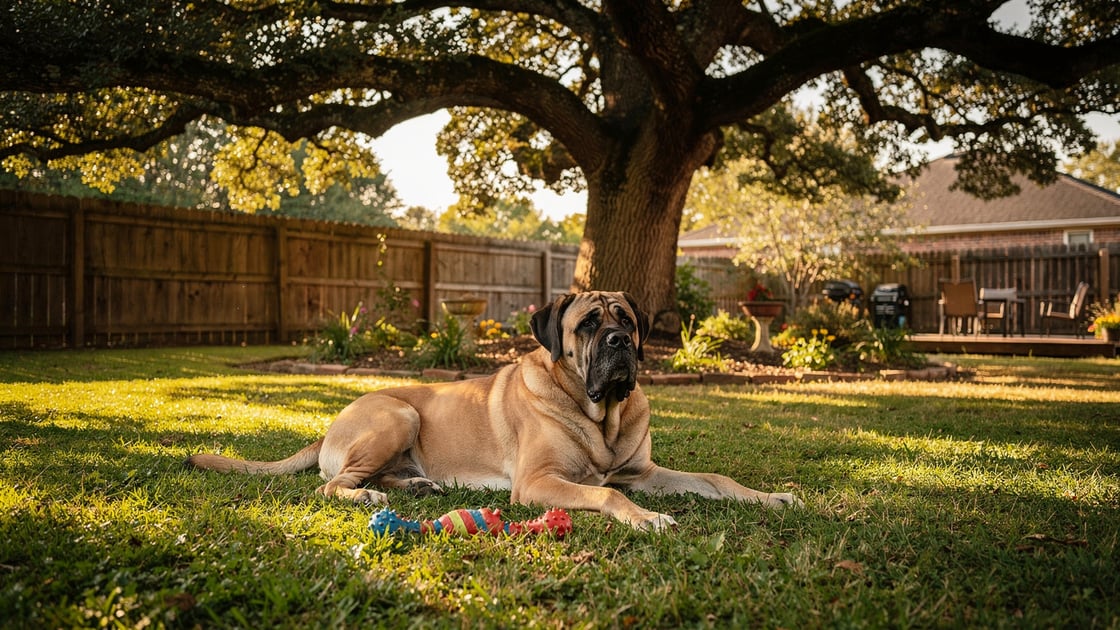
Labrador Retrievers are the most commonly affected breed - their weight, anatomy, and activity level put intense stress on the CCL.
What Is TPLO and Why It Costs So Much
TPLO - Tibial Plateau Leveling Osteotomy - is a surgical repair of the cranial cruciate ligament (CCL), the dog equivalent of the ACL in humans. Unlike a torn human ACL, which can sometimes heal conservatively, a ruptured CCL in a dog almost never resolves without surgery. The tibial plateau angle (the slope of the shin bone at the knee joint) creates constant forward shear force on the joint - which is why the ligament tears in the first place, and why simply suturing it back together doesn't work long-term.
In a TPLO, a board-certified veterinary surgeon makes a curved cut through the tibia, rotates the tibial plateau to change its angle, and fixes it in place with a metal plate and screws. The surgery eliminates the shear force entirely by changing the joint geometry. It's not cheap because it's genuinely complex: it requires specialized orthopedic training, specialized equipment, pre-operative CT or X-rays to measure the tibial plateau angle precisely, and a sterile surgical suite with anesthesia monitoring. A general practice vet almost never performs TPLO - this is specialist territory.
Total cost breakdown for one leg: Pre-op exam and radiographs ($200-$600) + optional MRI or CT to rule out meniscal damage ($500-$1,500) + surgery itself ($2,800-$5,500) + overnight hospitalization ($200-$600) + post-op follow-up X-rays ($150-$400) + physical rehabilitation ($100-$200/session × 6-10 sessions). All in, a single-leg TPLO runs $3,500 in a rural area to $7,000+ at an urban specialty hospital, with the national average sitting around $5,000-$5,500. That's per leg.
The Rural/Urban Price Gap
The single biggest variable in TPLO cost isn't your dog's size - it's your zip code. Veterinary specialists in urban metro areas (New York, Los Angeles, Chicago, San Francisco, Seattle) charge $1,500-$3,000 more for the same procedure than specialists in rural or mid-sized markets. This isn't gouging - it reflects real cost differences in commercial rent, staff salaries, equipment financing, and malpractice insurance in high-cost-of-living areas.
In rural states like Montana, Wyoming, or rural Ohio, a TPLO at a regional referral hospital typically runs $3,500-$4,500. In Dallas or Phoenix - mid-tier metros - expect $4,500-$5,500. In Boston, New York City, or the Bay Area, $6,000-$7,500 is standard, and some top university teaching hospitals bill above $8,000 when you include imaging and hospitalization. The same surgeon, the same implant, the same dog - $3,000 difference based on geography.
Practical options if you're in a high-cost market: Veterinary school teaching hospitals (UC Davis, Cornell, Tufts, Colorado State) often charge 30-40% less than private specialty hospitals for orthopedic cases - residents perform the surgery under faculty supervision. Driving 2-3 hours to a lower-cost regional specialist is also financially rational when the gap is $1,500+. Get two quotes before committing. Any board-certified veterinary surgeon (DACVS) is qualified; prestige address doesn't change outcomes.

The Bilateral Problem - When One Knee Means Two Bills
Here's the number most vets mention only after you've already paid for the first surgery: approximately 50% of dogs that tear one CCL will tear the other within two years. This isn't bad luck - it's biology. The same anatomical factors that predisposed the first knee (tibial plateau angle, body weight, breed-specific joint geometry) are present in both knees. When one leg is injured, the dog compensates by loading the opposite leg harder, accelerating wear on a ligament that was already at risk.
For high-risk breeds - Labs, Golden Retrievers, Rottweilers, Boxers, Newfoundlands - the bilateral rate is even higher. If your 80-pound Labrador tears the right CCL at age 5, you are statistically paying for two surgeries over the next 24 months. Budget accordingly. The total cost of bilateral TPLO runs $7,000-$14,000+ depending on your market - and if both tears happen within the same policy year, you may hit your annual insurance deductible twice.
Insurance timing is critical here because of bilateral condition exclusions. Many pet insurance policies classify the opposite knee as a bilateral condition - meaning if the right CCL is torn and documented, the left CCL may be excluded from coverage on renewal or treated as a pre-existing condition. This varies significantly by insurer. Some policies (Trupanion, in particular) explicitly cover the second knee as a new incident. Others do not. Read the bilateral exclusion clause before you enroll - this single policy detail could cost you $4,000-$6,000 if you're on the wrong plan.
What Insurance Covers (And When It Doesn't)
TPLO is fully covered by most comprehensive pet insurance policies - as long as you enrolled before the injury. A policy with $5,000-$10,000 annual limits, a $250 deductible, and 90% reimbursement will net you $3,000-$5,500 back on a typical TPLO bill. That math works strongly in your favor. The problem is that most people search "TPLO surgery cost" after their dog is already limping - at which point insurance coverage for that leg is gone. Any sign of lameness documented in your vet records before enrollment = pre-existing condition = denied claim.
The timing trap is subtle. You don't need a diagnosis of CCL tear for coverage to be denied. A single vet note saying "occasional right hind limb lameness" or "mild stifle discomfort" - recorded at a routine checkup six months before you enrolled - can be used to deny TPLO coverage entirely. Insurers review vet records at claim time, not at enrollment. The safe window for coverage: enroll a young dog (under 18 months) before any orthopedic notes exist in the record.
For dogs already diagnosed with a CCL tear on one side, the immediate priority is enrolling for the other leg. Get coverage in place before the second tear happens. Also factor in the waiting period - most insurers impose a 14-day waiting period for orthopedic conditions (some require 30 days, and a few require 6 months). If the second knee goes during that window, you're out of pocket again. Enroll the day after the first surgery is done, not six months later.

Alternatives: TTA, Lateral Suture, Conservative Management
TPLO is not the only surgical option for CCL tears - it's the most common because it has the best long-term data, but the alternatives are worth knowing. TTA (Tibial Tuberosity Advancement) is a similar osteotomy procedure that changes the patellar tendon angle rather than the tibial plateau slope. It has comparable outcomes to TPLO for most dogs and costs roughly the same - $3,000-$6,500. Some surgeons prefer TTA for dogs with very steep tibial plateau angles; it's not inferior, just less studied long-term in giant breeds.
The lateral suture technique (also called extracapsular repair) is an older, cheaper procedure that replaces the CCL with a heavy nylon suture on the outside of the joint. It costs $1,500-$3,500 and works reasonably well in dogs under 30 lbs. In larger dogs, the suture eventually breaks down and outcomes are inconsistent - most orthopedic specialists don't recommend it as the primary repair for dogs over 50 lbs. If cost is the constraint and your dog is small, lateral suture is a legitimate option. For Labs and Rottweilers, it's not the right tool.
Conservative management (strict cage rest for 8-12 weeks, anti-inflammatory medications, pain management) can stabilize Grade I partial tears in small dogs. In medium and large dogs with complete ruptures, conservative management typically fails - the joint degenerates rapidly without surgical stabilization, leading to severe arthritis that becomes its own expensive problem. A $4,000 TPLO today vs. $800/year in pain management for life plus eventual joint replacement - the surgery is usually the economically rational choice. Your vet will tell you honestly which path makes sense for your specific dog's tear severity and size.
TPLO Surgery - Common Questions
How much does TPLO surgery cost in 2026?
Does pet insurance cover TPLO surgery?
What is the recovery time for TPLO surgery?
What breeds are most likely to need TPLO surgery?
Is TPLO better than lateral suture repair?
Sources
- A note on this research. This is not financial, legal, or medical advice. We're a designer and programmer writing research for the community. Pet insurance rules change, prices vary by region, and we're not vets or insurance professionals. The sources below are what we rely on - verify them yourself, and for decisions with real consequences (surgery, claims appeals), consult a qualified veterinarian or insurance broker.
- Bergh MS, Sullivan C, Ferrell CL, Troy J, Budsberg SC. Systematic review of surgical treatments for cranial cruciate ligament disease in dogs. J Am Anim Hosp Assoc. 2014;50(5):315-321.
- Krotscheck U, Nelson SA, Todhunter RJ, Stone M, Zhang Z. Long term functional outcome of tibial tuberosity advancement vs. tibial plateau leveling osteotomy and extracapsular repair in a heterogeneous population of dogs. Vet Surg. 2016;45(2):261-268.
- Witsberger TH, et al. Prevalence of cruciate ligament deficiency in dogs. J Am Vet Med Assoc. 2008;232(12):1818-1824.